It’s hard to find someone who hasn’t heard of the Chinese horoscope or who doesn’t know that it’s very different from the European one we’re used to. But it’s even harder to find someone who understands that it’s about much more than just the animal patrons of certain years. So today, we will try to explore this complex topic and, at least at a basic level, understand how the Chinese zodiac signs determine human destinies and influence lives.
The Year of Birth
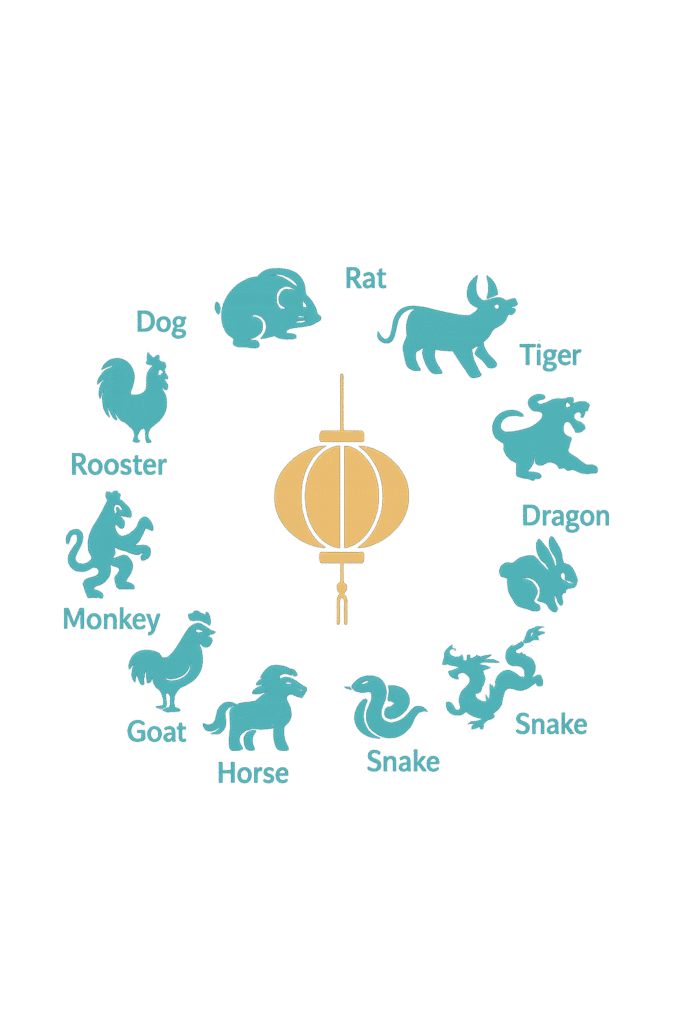
Depending on the year you were born, a specific animal will be your patron. And it won’t just protect you, but it will also define some of your character traits (more on that later). There are 12 animals in total: Rat, Ox, Tiger, Rabbit, Dragon, Snake, Horse, Goat, Monkey, Rooster, Dog, and Pig.
There are two main legends explaining why these particular animals were chosen. According to the first, these animals, in order of arrival, visited Buddha before he ascended to Nirvana.
According to the second legend, when the legendary Jade Emperor was forming the zodiacal circle, he chose these animals because they embodied virtues that were important to him.
But let’s not get too distracted by mythology and instead look at the specific Chinese horoscope by years.
- Rat: 1900, 1912, 1924, 1936, 1948, 1960, 1972, 1984, 1996, 2008, 2020
- Ox: 1901, 1913, 1925, 1937, 1949, 1961, 1973, 1985, 1997, 2009, 2021
- Tiger: 1902, 1914, 1926, 1938, 1950, 1962, 1974, 1986, 1998, 2010, 2022
- Rabbit: 1903, 1915, 1927, 1939, 1951, 1963, 1975, 1987, 1999, 2011, 2023
- Dragon: 1904, 1916, 1928, 1940, 1952, 1964, 1976, 1988, 2000, 2012, 2024
- Snake: 1905, 1917, 1929, 1941, 1953, 1965, 1977, 1989, 2001, 2013, 2025
- Horse: 1906, 1918, 1930, 1942, 1954, 1966, 1978, 1990, 2002, 2014, 2026
- Goat: 1907, 1919, 1931, 1943, 1955, 1967, 1979, 1991, 2003, 2015, 2027
- Monkey: 1908, 1920, 1932, 1944, 1956, 1968, 1980, 1992, 2004, 2016, 2028
- Rooster: 1909, 1921, 1933, 1945, 1957, 1969, 1981, 1993, 2005, 2017, 2029
- Dog: 1910, 1922, 1934, 1946, 1958, 1970, 1982, 1994, 2006, 2018, 2030
- Pig: 1911, 1923, 1935, 1947, 1959, 1971, 1983, 1995, 2007, 2019, 2031
Seems simple, right? But the Chinese horoscope has many nuances. For instance:
- It is based on the lunar calendar, not the solar one, so the date of the New Year fluctuates—from January 21st to February 21st. Those born in winter might face some challenges in accurately determining which Chinese zodiac sign is their patron.
- In Chinese, the same character means Goat, Sheep, and Ram. So you can choose the animal that appeals to you most. However, it is traditionally believed to be the Goat.
- Cat, Rabbit, or Hare? All three are suitable. Again, the character is common for both the Hare and the Rabbit. The Cat is more complicated. According to the legend of the Jade Emperor, the Cat was supposed to be the 4th sign of the Chinese zodiac. And it would have been, had it not overslept the selection process. A replacement had to be found urgently, which turned out to be the Hare/Rabbit.
Characteristic Traits, Lucky Numbers, and Colors
In Eastern tradition, it is believed that the Chinese zodiac signs bestow specific character traits upon their protégés. However, in the East, animals like the Rat are attributed with completely different qualities than what is common in the West. Furthermore, each sign has both positive and negative character traits, which once again emphasizes the dualism of all existence in Chinese philosophy. Here’s how it breaks down.
- Rat: Inspirational, vigilant, flexible, and resilient. However, these individuals can lack perseverance, persistence, and stability, and they don’t handle external pressure well.
- Numbers: 2, 3
- Colors: Blue, Gold, Green
- Ox: Honest, intelligent, hardworking, and stable. These people are very devoted to their work, family, and friends. But they can also be overly stubborn, formal, and not very good at expressing their feelings and emotions.
- Numbers: 1, 9
- Colors: Blue, Red, Purple
- Tiger: Courageous, intelligent, attentive, and steadfast. Unfortunately, those under the patronage of this Chinese zodiac sign are very quick-tempered and are reluctant to take an interest in matters that have no practical value for them personally.
- Numbers: 1, 3, 4
- Colors: Blue, Gray, White, Orange
- Rabbit: Modest, sensitive, compassionate, and humorous. However, Rabbits can be quite wasteful and stubborn, yet indecisive. And let’s not forget about the Cat who slept through its appointment as a patron, which is why these people can also be quite lazy.
- Numbers: 1, 4, 9
- Colors: Red, Pink, Purple, Blue
- Dragon: Confident, romantic, energetic, and inclined to perfect everything. They are also characterized by a certain arrogance, intolerance of others’ shortcomings, and excessive self-confidence.
- Numbers: 1, 6, 7
- Colors: Gold, Silver, Gray
- Snake: Wise, prudent, efficient, and skilled at earning money through their talents. Unfortunately, Snakes can also be overly suspicious, jealous, and picky.
- Numbers: 2, 8, 9
- Colors: Red, Black, Yellow
- Horse: Kind, witty, optimistic, and emotional. However, these individuals are also considered too impatient and superficial, as well as restless.
- Numbers: 2, 3, 7
- Colors: Brown, Yellow, Purple
- Goat: Intelligent, delicate, open, and possessing good taste. At the same time, Goats are often shy, pessimistic, moody, and prone to worrying about trivial matters.
- Numbers: 3, 4, 9
- Colors: Green, Red, Purple
- Monkey: Witty, original, intelligent, and flexible. But those under the patronage of this Chinese zodiac sign can also be jealous, selfish, and intolerant of others’ flaws.
- Numbers: 1, 7, 8
- Colors: White, Blue, Gold
- Rooster: Sociable, talented, independent, and inclined to carefully analyze the world around them. However, they are also overly self-confident and not very skilled at communicating with others.
- Numbers: 5, 7, 8
- Colors: Gold, Yellow, Brown
- Dog: Loyal, responsible, brave, and able to soberly assess situations. But these people are also easily distracted, often nitpick at others, and are overly sharp in their judgments.
- Numbers: 3, 4, 9
- Colors: Green, Red, Purple
- Pig: Honest, diligent, optimistic, and resilient. However, they are often excessively naive, impulsive, and don’t know when to stop.
- Numbers: 2, 5, 8
- Colors: Brown, Yellow, Gold
Chinese Zodiac Compatibility
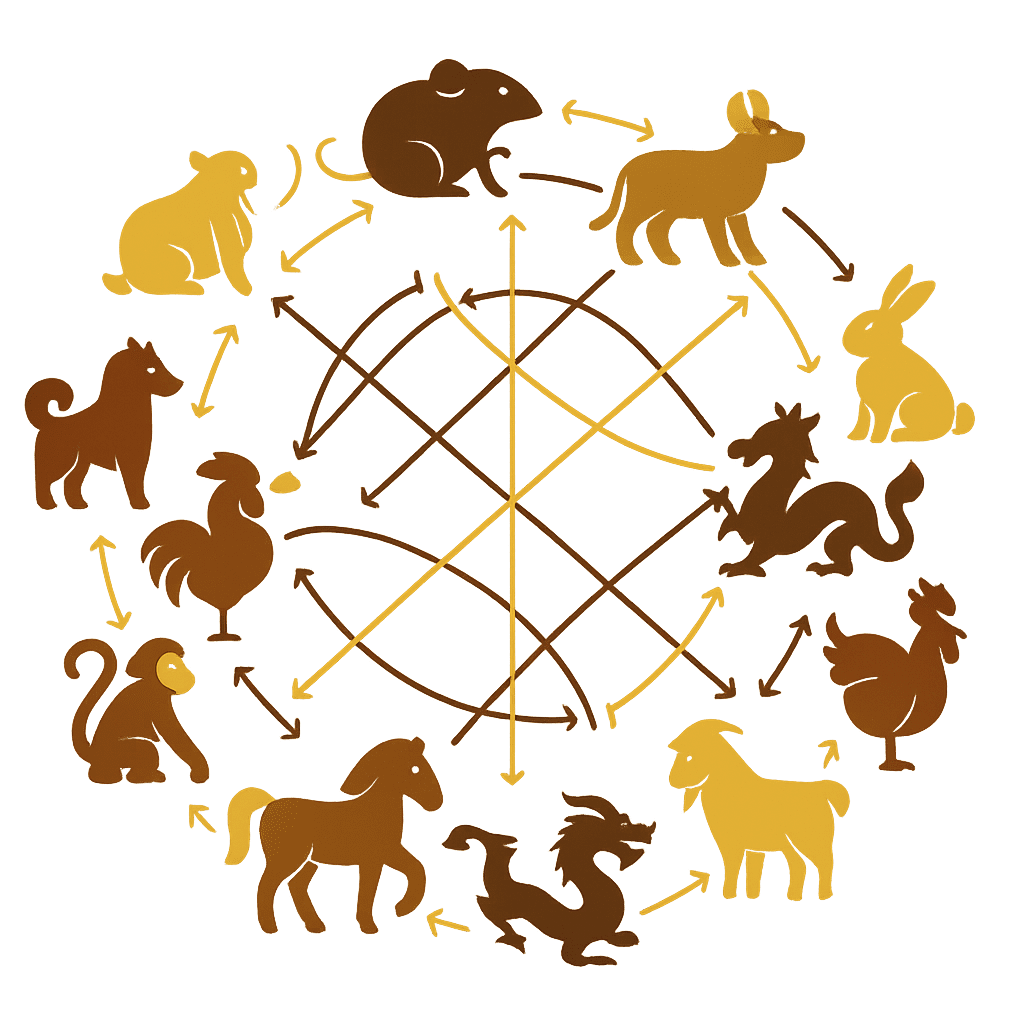
Given their typical character traits, different signs of the Chinese horoscope interact with each other in different ways. For some, building relationships and simply interacting will be much easier than for others. To simplify, the situation is as follows:
- Rat. Easy with Dragon, Ox, and Monkey. Difficult with Goat, Horse, and Rabbit.
- Ox. Easy with Rat, Snake, and Rooster. Difficult with Horse, Dog, and Goat.
- Tiger. Easy with Horse and Dog. Difficult with Snake and Monkey.
- Rabbit. Easy with Goat, Pig, and Dog. Difficult with Rat and Dragon.
- Dragon. Easy with Rat, Monkey, and Rooster. Difficult with Ox, Dog, and Rabbit.
- Snake. Easy with Ox and Rooster. Difficult with Tiger and Pig.
- Horse. Easy with Tiger, Goat, and Dog. Difficult with Rat, Ox, and Rabbit.
- Goat. Easy with Rabbit, Horse, and Pig. Difficult with Ox and Dog.
- Monkey. Easy with Rat, Dragon, and Snake. Difficult with Tiger and Pig.
- Rooster. Easy with Ox, Dragon, and Snake. Difficult with Rat, Rabbit, and Dog.
- Dog. Easy with Tiger, Rabbit, and Horse. Difficult with Ox, Dragon, Goat, and Rooster.
- Pig. Easy with Goat and Rabbit. Difficult with Snake, Monkey, and another Pig (yes, that happens too).
As you may have noticed, the ease or difficulty of communication does not have to be mutual. For example, the Rat gets along easily with the Dragon, just as the Dragon gets along easily with the Rat. But while the Horse finds it difficult to communicate with the Rabbit, the Rabbit feels fine with the Horse.
The Four Pillars of Destiny
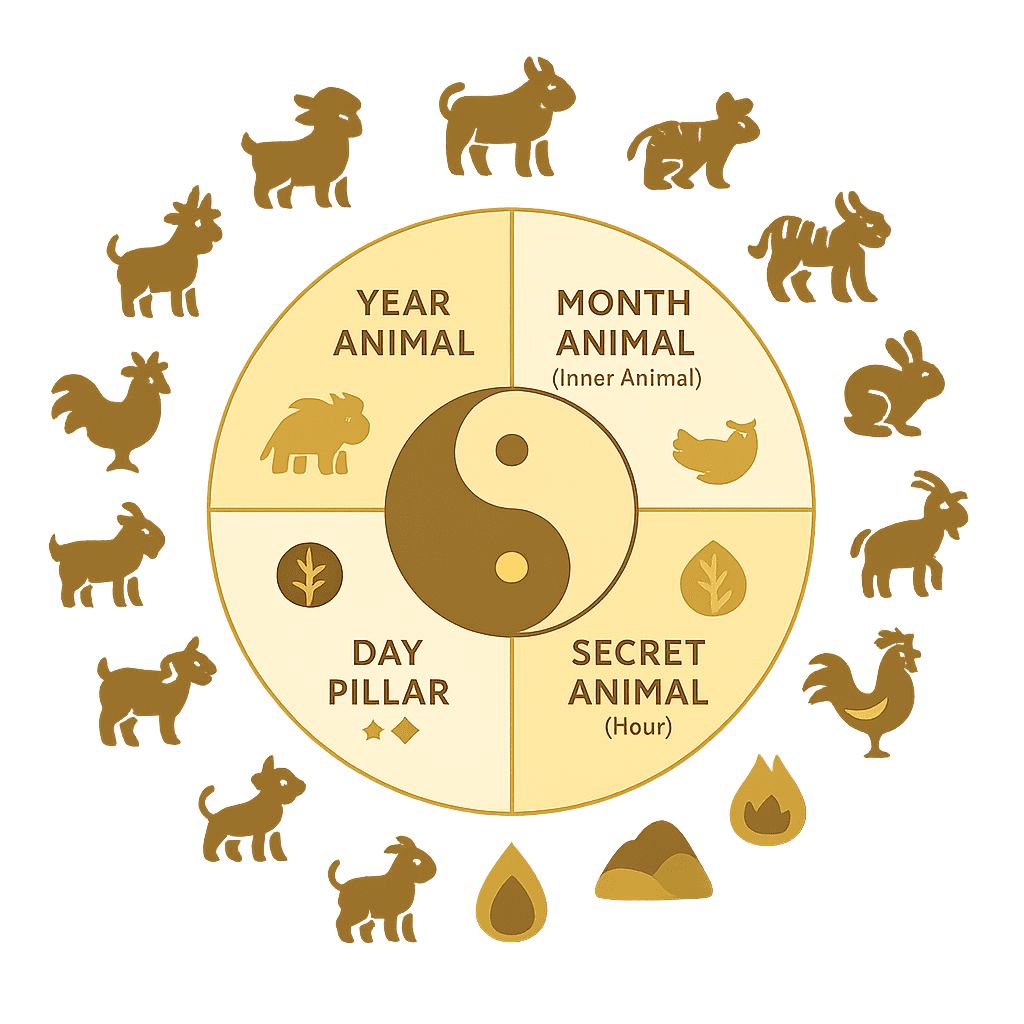
This is a further development of the Chinese horoscope concept. In Eastern tradition, it is believed that a person’s character is influenced not only by their year of birth but also by the exact time of their birth. This brings it closer to the Western concept of natal charts, but instead of planets and constellations, it uses the Chinese zodiac animals.
Therefore, a person can be born in the year of the Pig but have character traits more typical of someone under the patronage of the Rooster. Or the Rat. All these patterns are combined in the concept of the “Pillars of Destiny,” which we will now discuss. Your year of birth, which we have been actively discussing, is the first pillar of destiny. It primarily determines the early years of life and some basic character traits.
The “Inner Animal”
This is the second pillar, determined by the month of birth. A direct parallel can be drawn here with the familiar European zodiac. It is believed that the “inner animal” defines one’s character from the beginning of adolescence until full adulthood. This is because the Chinese horoscope takes into account that people tend to change over time.
- Rat: December 7 – January 5
- Ox: January 6 – February 3
- Tiger: February 4 – March 5
- Rabbit: March 6 – April 4
- Dragon: April 5 – May 4
- Snake: May 5 – June 5
- Horse: June 6 – July 6
- Goat: July 7 – August 6
- Monkey: August 7 – September 7
- Rooster: September 8 – October 7
- Dog: October 8 – November 6
- Pig: November 7 – December 6
The “Day Pillar”
The Chinese zodiac signs also correspond to days. We won’t list them in detail here because in the Chinese horoscope, they change in a sexagenary (60-year) cycle. This cycle combines the zodiac animal with one of the five elements: Metal, Wood, Water, Fire, or Earth.
It is believed that this pillar defines your character in your mature years, as well as what your married life will be like. So when you study Chinese horoscope compatibility for planning future relationships, consider not only the year of birth but also the day.
The “Secret Animal”
This is the fourth pillar, determined by the hour of birth. It is considered to be your self-perception. In a way, your “true self,” without the overlay of upbringing or environmental influences. It can even be called the “source of inner strength.” It is this pillar that determines your relationships with your children and your later years in life.
- Rat: 11:00 PM – 1:00 AM (23:00 – 01:00)
- Ox: 1:00 AM – 3:00 AM (01:00 – 03:00)
- Tiger: 3:00 AM – 5:00 AM (03:00 – 05:00)
- Rabbit: 5:00 AM – 7:00 AM (05:00 – 07:00)
- Dragon: 7:00 AM – 9:00 AM (07:00 – 09:00)
- Snake: 9:00 AM – 11:00 AM (09:00 – 11:00)
- Horse: 11:00 AM – 1:00 PM (11:00 – 13:00)
- Goat: 1:00 PM – 3:00 PM (13:00 – 15:00)
- Monkey: 3:00 PM – 5:00 PM (15:00 – 17:00)
- Rooster: 5:00 PM – 7:00 PM (17:00 – 19:00)
- Dog: 7:00 PM – 9:00 PM (19:00 – 21:00)
- Pig: 9:00 PM – 11:00 PM (21:00 – 23:00)
Yin and Yang
This is the foundation of Chinese dualism. It is believed that Yin represents odd numbers, passivity, cold, femininity, and dark energy. Yang, conversely, represents even numbers, activity, warmth, masculinity, and light energy. Over time, Yin smoothly transitions into Yang, and vice versa.
The Chinese zodiac signs are also dualistic: those whose years end in an even number belong to Yang, while the rest belong to Yin.
The Elements
The dominant element is determined by the last digit of your birth year. The pattern is simple:
- 0 or 1: Metal
- 2 or 3: Water
- 4 or 5: Wood
- 6 or 7: Fire
- 8 or 9: Earth
Why is this important? Because the elements influence each other both creatively and destructively. For example, someone born in 2000, whose element is Metal, will find it quite challenging in 2026, when the dominant element will be Fire (which overcomes Metal). Conversely, in 2028, when Earth is active, life will become easier because Earth strengthens their element.
“Heavenly Stems” and “Earthly Branches”
These are two more important concepts in the Chinese horoscope. The “Heavenly Stems” refer to a ten-year cycle determined by the combination of an element and its Yin/Yang aspect. For example, the year 2002, the year of the Horse, had the “stem” of Water Yang. The “Earthly Branches” are, in fact, the Chinese zodiac animals themselves. Together, they form the sixty-year cycle of the aforementioned “Day Pillar.”
How to Work with the Chinese Horoscope?
To begin with, this is a constant factor. Everyone born in the year of the Rabbit, for example, will have predispositions to certain character traits, both positive and negative. But a predisposition is not a 100% certainty. It is a “signal” about what you need to work on, and what, on the contrary, can be used as a tool to achieve your goals.
The same applies to the interactions of elements, Yin/Yang, and numbers. If the interaction is positive, you will have a better chance of success, but only if you actually do something. And if it is negative, it is better for you to be aware of it so you can exercise greater caution and prudence.
It can be quite difficult to figure this out on your own, as in reality, everything is much more complex than the simple schemes and principles we have described. So if you don’t want to explore them yourself, you can turn to an astrologer or a Feng Shui specialist. For them, the Chinese horoscope is a primary working tool, so they will explain everything to you in detail and give you specific advice. For example, they can tell you which talismans to carry with you to reduce the negative impact of unfavorable time periods. Or which days are more suitable for making important decisions and taking risky ventures.
In any case, remember that you are the one who determines your destiny. The stars, planets, talismans, lucky numbers, and signs of the Chinese zodiac are merely factors that can either make this task easier for you or, conversely, somewhat more difficult.
❓Chinese Horoscope FAQ
How does the Chinese horoscope work?
What is my Chinese zodiac animal?
What are the five elements in the Chinese horoscope?
Is the Chinese horoscope the same as the Western zodiac?
Which Chinese zodiac animals are most compatible?

Angela Sterling is a professional astrologer, numerologist and the founder of Buzzjolty. With more than 15 years of study behind her, she writes every horoscope, crystal guide and numerology reading on the site to help you find clarity, meaning and a little cosmic magic. More about Angela →
📅 Tracking Your Astrological Year
Following monthly horoscopes is one part of the practice. Tracking what unfolds, journaling about it, and noticing patterns is what turns passive reading into active wisdom.
- 2026 Astrology Planner ($22 to 38) — lunar phases, transits, and planetary events mapped.
- Astrology Journal ($16 to 28) — reflect on monthly predictions, track accuracy.
- 2026 Ephemeris ($18 to 28) — professional reference for planetary positions.
- Zodiac Wall Calendar ($14 to 24) — beautiful art with monthly astrological notes.
Astrology becomes more powerful when paired with the tools that translate insight into daily practice. The combined cost of starting is small. The depth it adds to your understanding compounds for years.
