Agate
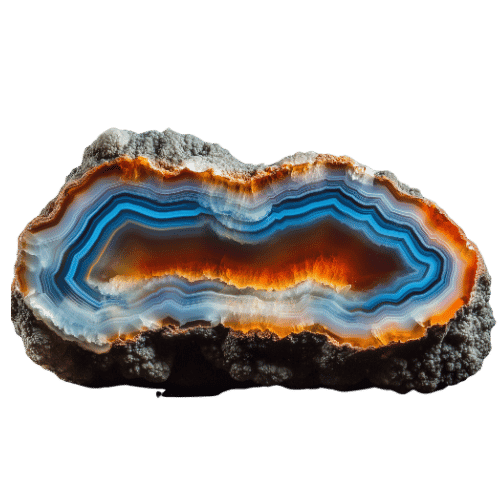
The banded volcanic gem with millions of years of growth rings
Agate Quick Facts
The History of Agate
Agate is one of humanity's oldest gem-cutting traditions. The Greek scholar Theophrastus (c. 372-287 BC) described agate in detail, naming it for the Achates River in Sicily where it was first noticed. Egyptian agate amulets from 3000 BC have been found in tombs. The famous Roman cameo carving tradition reached its peak during the reign of Augustus (1st century AD) — agate's natural color layers allowed master carvers to create three-dimensional portraits and scenes by cutting away upper layers to reveal contrasting colors beneath. The Gemma Augustea (a 19×23 cm sardonyx-agate cameo from 9-12 AD) is among the masterpieces of Roman art. The 17th-century Idar-Oberstein region of Germany became the world capital of agate cutting, a tradition that survives today. Modern agate sources include Brazil (the largest), Uruguay, India, Mexico, and the United States. Each agate is unique — no two stones have the same banding pattern.
Agate Meaning & Symbolism
Agate symbolizes grounding, emotional stability, and protection during long journeys. Roman soldiers wore agate amulets engraved with images of Mars before battle. Egyptian sailors carried agate for protection on dangerous sea voyages. In Hindu astrology, agate is associated with Saturn and is recommended for those needing inner discipline and patience. Modern crystal healing places agate at the root and sacral chakras (stability, emotional safety) and recommends it for those processing emotional trauma or anxiety. Different agate varieties (blue lace, dendritic, moss, fire) carry distinct sub-meanings — but the core symbolism of grounding and protection persists across them all.
Famous Agates in History
The Gemma Augustea (9-12 AD), a sardonyx-agate cameo of Emperor Augustus, is one of Western art history's masterpieces — at the Kunsthistorisches Museum, Vienna. The Great Cameo of France (c. 23 AD), the largest surviving Roman cameo at 31×26 cm, depicts the Julio-Claudian dynasty in five layers of agate. The Idar-Oberstein Agate Museum in Germany displays the world's largest collection of agate carvings, including Renaissance pieces of breathtaking complexity. The Smithsonian's Brazilian agate slabs, some over 4 feet in diameter, are exhibited as sculptures.
How to Care for Agate
Agate is hard (Mohs 6.5-7), suitable for daily wear. Most agate is natural and untreated; some is dyed (especially the bright blues and pinks sold as jewelry-grade). Cleaning is straightforward: warm water, mild dish soap, a soft brush. Ultrasonic cleaners are generally safe for solid agate. Store separately from harder gems to prevent surface scratching. Polished agate can develop a duller finish over years of wear; light buffing with a polishing cloth restores shine.
Names That Connect to Agate
Agate's banded earth-pattern resonates with names meaning earth, dawn, or natural cycles — Aurora (dawn), Iris (rainbow), Stella (star).
Agate — Common Questions
Why is each agate unique?
Agate forms in volcanic cavities through millions of years of mineral-rich water deposition. The bands form one slow layer at a time, recording the changing chemistry of the water at each moment. No two cavities have identical conditions, so no two agates have identical patterns. This natural uniqueness is part of what makes agate so prized.
Are agates dyed?
Some commercial agates (especially bright blues, hot pinks, vivid greens that occur rarely in nature) are dyed to enhance color. Dyeing is centuries-old and accepted in the trade — but reputable sellers should disclose treatment. Natural-color agates (browns, oranges, reds, white-on-blue lace) are valued for their authentic patterns.
Can agate be worn every day?
Yes. Agate's hardness (Mohs 6.5-7) makes it suitable for daily jewelry. Like all colored gems, avoid sudden temperature changes and harsh chemicals. Agate is more durable than amethyst or peridot. Excellent for cabochons, pendants, and earrings.
What is moss agate?
Moss agate is a translucent agate with green inclusions of dendritic chlorite or hornblende that look like moss or branching plants frozen inside the stone. It is technically a chalcedony, not a true agate (no banding), but is sold in the agate family. Moss agate is associated with abundance and connection to nature.
Why is agate connected to grounding?
Across cultures, agate has been associated with stability and emotional grounding because of its long, slow formation process and its visual connection to earth and rock layers. The bands themselves represent time, patience, and steady accumulation. Modern crystal healing draws on these symbolic qualities for grounding and stability work.
Other Stones to Explore
More Cosmic Tools
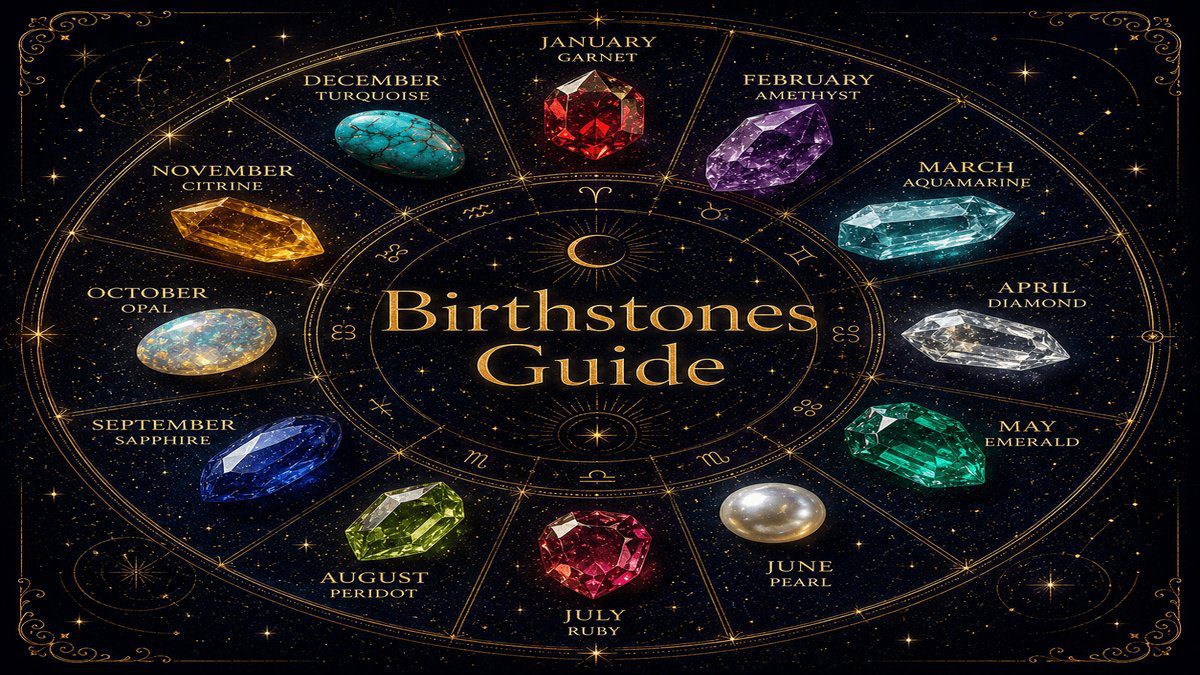
Find Your Birthstone by Birth Month
Each month has its own stone with unique meaning, history, and healing energy. Tap your birth month to discover yours in detail.