Moonstone
The lunar gem of feminine intuition, dreams, and adularescence
Moonstone Quick Facts
The History of Moonstone
Moonstone has been associated with the moon since antiquity. The Romans believed it was solidified moonbeams; Hindu mythology says it formed from the moon's frozen rays. Sri Lanka has produced the finest blue-sheen moonstone for over 2,000 years, supplying the gem to ancient Roman, Greek, and Indian markets. The Mughal Emperors of India treasured moonstone for ceremonial jewelry. In Art Nouveau Europe (1890-1910), moonstone became the signature gem of the era — René Lalique, Louis Comfort Tiffany, and Georges Fouquet incorporated it into masterpiece jewelry now housed in the Met and the Museum of Decorative Arts in Paris. The 1960s and 1970s saw a counter-cultural revival; moonstone became associated with feminine intuition, healing, and lunar magic. Today's finest moonstones come from Sri Lanka, Myanmar, and India, with newer deposits in Madagascar.
Moonstone Meaning & Symbolism
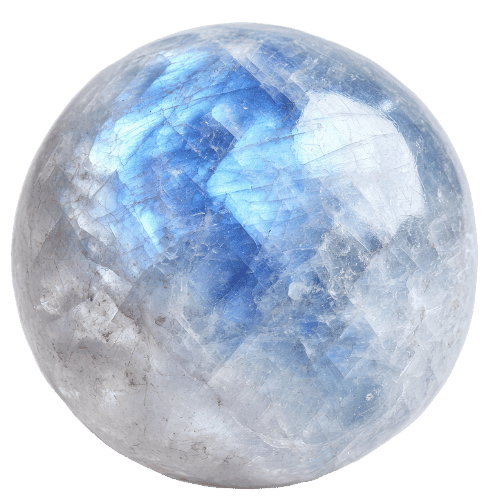
Moonstone is the gem of feminine intuition, emotional balance, and the cyclical wisdom of the lunar phases. The play-of-light called adularescence (after Mount Adular in Switzerland, where fine moonstone was once mined) creates a billowing blue glow that seems to float beneath the surface — like moonlight trapped in stone. In Hindu tradition, moonstone was a sacred dream stone, placed under the pillow to grant prophetic visions. In Vedic astrology, moonstone corresponds to the Moon, governing emotions, intuition, and feminine energy. Modern crystal healing recommends moonstone for the third eye and crown chakras, for menstrual cycles, fertility, and emotional release. The gem is sacred to the goddesses Diana, Artemis, and Selene.
Famous Moonstones in History
The Adolph Hitler moonstone scandal: a German naturalist named a 28-carat blue moonstone after Hitler in 1938; it was renamed simply the Star of Sri Lanka after WWII. The Smithsonian holds a 32.4-carat Sri Lankan moonstone with intense blue adularescence. René Lalique's moonstone Art Nouveau brooches sell at auction for $50,000-200,000 each. The Indian Maharani's moonstone necklace, displayed at the V&A Museum in London, contains 47 graduated cabochons cut from a single Sri Lankan crystal. The 1980s film Moonstruck (Cher, Nicolas Cage) revived public interest in the gem.
How to Care for Moonstone
Moonstone is moderately hard (Mohs 6-6.5) but has perfect cleavage in two directions — it can split if struck sharply. Avoid ultrasonic and steam cleaners. Clean with warm water, mild soap, and a soft cloth. Store separately from harder gems to prevent scratching. Moonstone can lose its adularescence if exposed to harsh chemicals or extreme heat. Best worn in earrings, pendants, and protective ring settings (bezel rather than prong).
Names That Connect to Moonstone
Moonstone's lunar magic resonates with names meaning moon — Luna and Selena directly invoke the moon goddesses, and Diana is the Roman moon goddess herself.
Moonstone — Common Questions
What is adularescence in moonstone?
Adularescence is the optical phenomenon that gives moonstone its glow — light scattering between thin internal layers of orthoclase and albite feldspar. The effect creates a billowing blue or white sheen that appears to move beneath the stone's surface as it is tilted. Top-quality moonstones (Sri Lankan blue sheen) command premium prices because of strong adularescence.
Are rainbow moonstones real moonstones?
Rainbow moonstone is technically white labradorite (a different feldspar species) that displays multicolored adularescence. It is sold and accepted as moonstone in the gem trade. True moonstone (orthoclase) typically shows blue-white adularescence; rainbow moonstone shows blue, green, orange, and pink flashes. Both are beautiful and authentic feldspars.
Can moonstone be worn every day?
Moonstone is softer than most birthstones (Mohs 6-6.5) and has cleavage planes that can split under impact. Earrings, necklaces, and protective ring settings work best for daily wear. Avoid moonstone in solitaire rings if you do manual work. Remove before sleeping (to prevent compression damage).
Is moonstone connected to fertility?
Across multiple cultures (Hindu, Native American, ancient Roman), moonstone has been associated with fertility, menstrual cycles, and feminine reproductive health. Modern medical science does not validate these claims. However, moonstone remains popular as a meditative aid for women navigating fertility, pregnancy, or hormonal changes.
Why is moonstone a June birthstone?
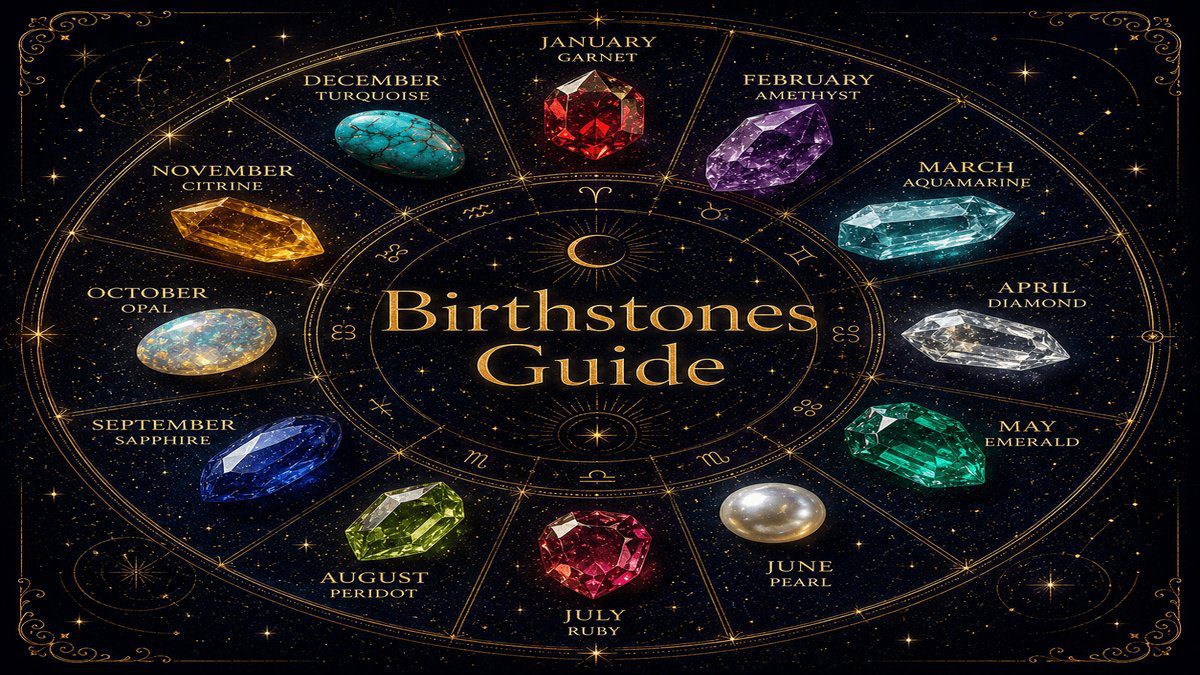
Moonstone joined June's birthstone list (alongside pearl and alexandrite) because all three share the quality of shifting beauty — pearl's iridescence, alexandrite's color change, moonstone's adularescence. June's astrological signs (Gemini and Cancer) also resonate with moonstone's themes of duality (Gemini) and emotional depth (Cancer).
Other Stones to Explore
More Cosmic Tools
Find Your Birthstone by Birth Month
Each month has its own stone with unique meaning, history, and healing energy. Tap your birth month to discover yours in detail.
💎 Bringing Moonstone Into Your Practice
Reading about Moonstone activates one part of you. Holding Moonstone activates an entirely different part. Ancient cultures across continents independently established the same truth: the stone in the hand does what the stone in the mind cannot.
Choose Your Format
- Tumbled Moonstone ( to 14) for pocket carry and meditation.
- Raw Moonstone ( to 32) most powerful energetically for altar or desk.
- Moonstone Bracelet ( to 35) daily-wear, energy active 24/7.
- Moonstone Pendant ( to 45) over heart chakra for emotional work.
Authenticity Quick Check
Verify: weight (denser than expected), temperature (cool in palm 30+ sec), color depth (natural variation, not uniform). Avoid mixed-category sellers and prices under .
Caring for Your Stone
Moonstone absorbs ambient energy continuously. Weekly cleansing required. The simplest tool: a Selenite charging plate ( to 22). Place crystals on it overnight. See our complete cleansing guide for 6 more methods.