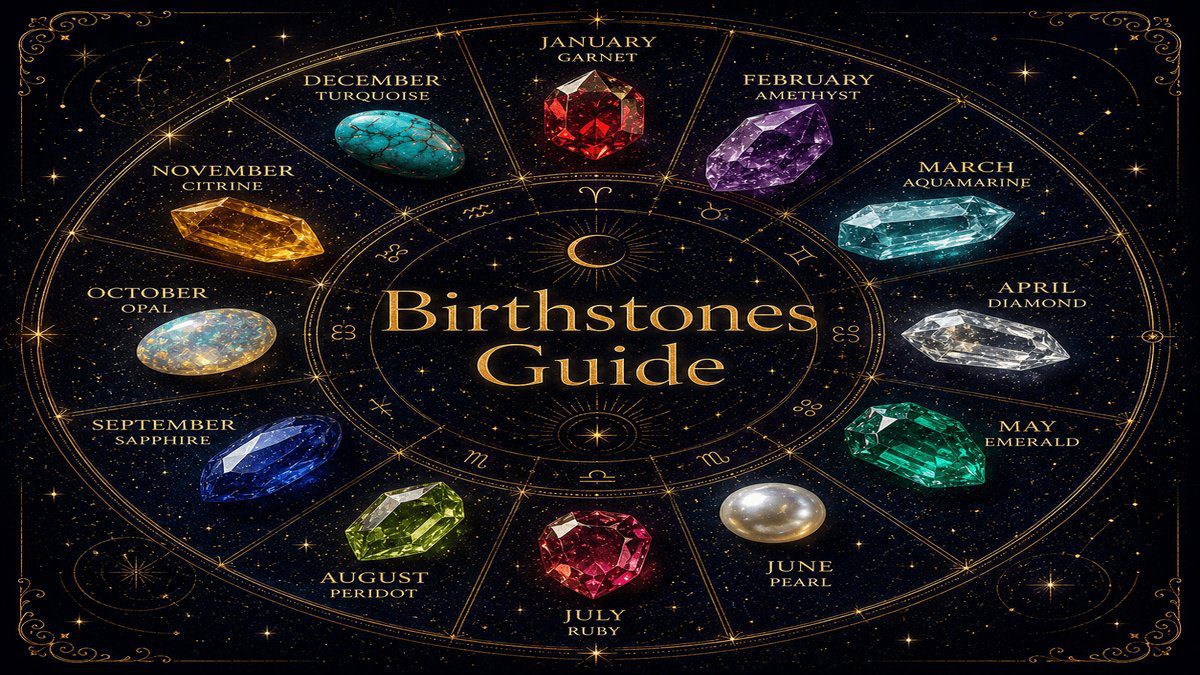
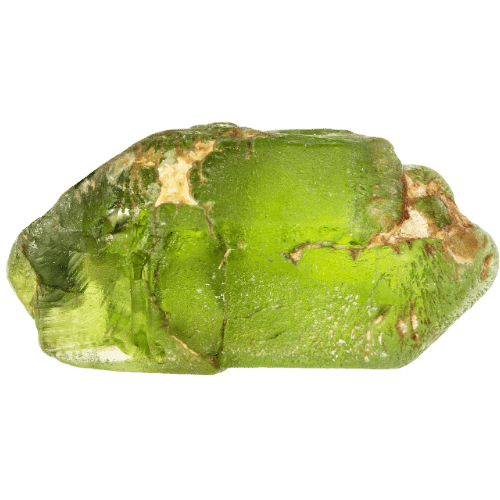
Peridot
The volcanic gem from Earth's mantle and meteorites — sun-glow in olive green
Peridot Quick Facts
The History of Peridot
Peridot is one of only two gemstones formed in the Earth's mantle (diamond is the other). Most peridot reaches the surface through volcanic eruptions; some peridot has fallen to Earth in meteorites — making it the only commercial gemstone of extraterrestrial origin. The ancient Egyptians mined peridot from the volcanic island of Zabargad (also called Saint John's Island) in the Red Sea, an operation guarded so heavily that for 3,500 years the location was a state secret. Cleopatra's famous "emerald" jewelry was likely peridot — gemological identification was imprecise in antiquity. The Crusaders brought peridot back from the Holy Land thinking it was emerald; major medieval cathedrals in Cologne, Köln, and elsewhere display these mistakenly identified peridots in their crown jewels. Modern peridot sources include Pakistan (extraordinary deep green), Arizona (San Carlos Apache Reservation), Vietnam, and Myanmar.
Peridot Meaning & Symbolism
Peridot symbolizes light, abundance, and the protective power of the sun. The Egyptians called it the "gem of the sun" and believed it warded off the terrors of the night. Ancient Hawaiians considered peridot the tears of the volcano goddess Pele. Roman naturalists wrote that peridot dispelled enchantments and dispersed evil spirits. In Vedic astrology, peridot corresponds to Mercury and is recommended for those needing communication clarity, emotional lightness, and protection from envy. Modern crystal healing places peridot at the heart chakra (despite its color, the warm tone is considered emotional rather than just visual). The gem is associated with prosperity, attracting positive opportunities, and protective light.
Famous Peridots in History
The Smithsonian's 311-carat peridot, mined from Zabargad Island, is the largest cut peridot in any museum. The Diamond Jubilee Pendant at the Tower of London contains a 192-carat peridot from Egyptian sources, given to Queen Elizabeth II in 1952. The Cologne Cathedral's central altar displays three 200-carat peridots that were once believed to be emeralds — only identified correctly in the 19th century. Pakistan's Suppat mines have produced spectacular gem-quality peridots up to 75 carats since 1992.
How to Care for Peridot
Peridot is moderately hard (Mohs 6.5-7) — durable for most jewelry but more fragile than the harder gems (sapphire, ruby). Avoid ultrasonic cleaners (peridot is heat-sensitive and brittle). Clean with warm water, mild dish soap, and a soft brush. Avoid sudden temperature changes. Store separately from harder stones to prevent scratching. Despite folklore that peridot is sensitive to the moon, no scientific basis exists for this claim — peridot is stable in normal conditions.
Names That Connect to Peridot
Peridot's olive-green sun-glow resonates with names meaning olive (Olivia, Oliver) and other plant-themed names rooted in nature.
Peridot — Common Questions
Is peridot the same as emerald?
No — peridot and emerald are completely different minerals. Peridot is olivine (gem-quality forsterite); emerald is beryl. Both are green, but peridot has an olive-green tone with hints of yellow, while emerald is bluer and richer. Peridot is harder than amethyst but softer than emerald. The two were historically confused in antiquity.
Where does peridot come from?
Major peridot sources include Pakistan (Suppat mine, deepest green), Egypt (Zabargad Island, historic), Arizona (San Carlos), Vietnam, Myanmar, and Norway. Some peridot has fallen to Earth in pallasitic meteorites — extraterrestrial peridot has been mined from meteorite fragments and is sold as a novelty.
Why is August birthstone peridot?
Peridot has been the August birthstone since the modern American list was standardized in 1912. The summer-warm olive green matches the season. The traditional birthstone for August was sardonyx, which remains as an alternative. The mystical Tibetan tradition assigns diamond to August.
How rare is gem-quality peridot?
Common peridot is widely available and affordable ($30-150 per carat). Truly fine peridot — saturated grass-green over 5 carats with no eye-visible inclusions — is rarer than people think. Pakistani Suppat peridot (called "Burmese peridot" in older literature) is the most prized variety, commanding $300-1,500 per carat.
Is peridot really from outer space?
Some peridot is. Pallasitic meteorites contain crystallized olivine (peridot's mineral name) that fell to Earth from space. These extraterrestrial peridots are limited in supply and sold as collector pieces or carved into small jewelry. Most commercial peridot, however, comes from terrestrial volcanic deposits.
Other Stones to Explore
More Cosmic Tools
Find Your Birthstone by Birth Month
Each month has its own stone with unique meaning, history, and healing energy. Tap your birth month to discover yours in detail.
💎 Bringing Peridot Into Your Practice
Reading about Peridot activates one part of you. Holding Peridot activates an entirely different part. Ancient cultures across continents independently established the same truth: the stone in the hand does what the stone in the mind cannot.
Choose Your Format
- Tumbled Peridot ( to 14) for pocket carry and meditation.
- Raw Peridot ( to 32) most powerful energetically for altar or desk.
- Peridot Bracelet ( to 35) daily-wear, energy active 24/7.
- Peridot Pendant ( to 45) over heart chakra for emotional work.
Authenticity Quick Check
Verify: weight (denser than expected), temperature (cool in palm 30+ sec), color depth (natural variation, not uniform). Avoid mixed-category sellers and prices under .
Caring for Your Stone
Peridot absorbs ambient energy continuously. Weekly cleansing required. The simplest tool: a Selenite charging plate ( to 22). Place crystals on it overnight. See our complete cleansing guide for 6 more methods.