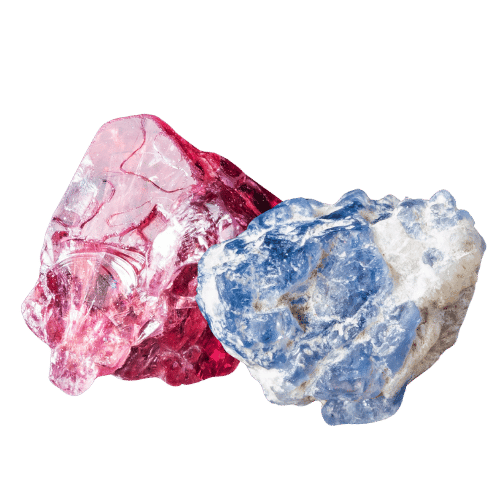
Spinel
The great impostor — for centuries mistaken for ruby, now finally its own gem
Spinel Quick Facts
The History of Spinel
Spinel is the great impostor of gemology. For centuries — from ancient Persia through medieval Europe — spinels were mistaken for rubies because they share similar red color, transparency, and refractive properties. The Black Prince's Ruby in the British Crown Jewels (set into the Imperial State Crown) is actually a 170-carat spinel, given to Edward the Black Prince in 1367. The Timur Ruby, a 352-carat spinel inscribed with the names of Mughal emperors, was thought to be a ruby for centuries. Only in the 18th century did gemologist Jean-Baptiste Romé de l'Isle finally identify spinel as a separate species. The 2016 American Gem Trade Association added spinel as an official August birthstone, ending centuries of being overlooked. Modern spinel sources include Myanmar (the historic Mogok Valley, source of the Black Prince's stone), Tanzania, Tajikistan, and Sri Lanka. Spinel comes in nearly every color: red, pink, orange, blue, purple, black.
Spinel Meaning & Symbolism
Spinel symbolizes vitality, renewal, and the courage to claim your own identity. After centuries of being mistaken for ruby, spinel is now finally celebrated for its own beauty. The symbolism of the misidentified-then-recognized gem resonates with people who have been overlooked, miscategorized, or seen for someone they are not. In Vedic astrology, spinel corresponds to Mars (red varieties) or Saturn (blue and black varieties). Hindu tradition associates spinel with vitality and cosmic balance. Modern crystal healing recommends spinel for emotional revival, physical energy, and the courage to be seen accurately.
Famous Spinels in History
The Black Prince's Ruby (170 carats), set into the British Imperial State Crown, is the most famous spinel in history — confused with ruby for over 600 years. The Timur Ruby (352 carats), inscribed with names of Mughal emperors, is in the British Royal Collection. The Côte de Bretagne (107 carats), a French Crown spinel, is at the Louvre. The Samarian Spinel (500 carats, mounted in the Iranian Crown Jewels) is the largest spinel known. The 2007 discovery of stunning red spinel in Mahenge, Tanzania, sparked a renewed market for the gem.
How to Care for Spinel
Spinel is hard (Mohs 8), suitable for daily wear in any setting. No common treatments — most spinel is sold natural. Clean with warm water and mild dish soap. Ultrasonic cleaners are generally safe. Store separately from softer gems. Spinel resists scratching and chipping better than many colored stones, making it excellent for engagement rings and daily-wear pieces.
Names That Connect to Spinel
Spinel's red passion (and its history as the gem mistaken for ruby) connects with the same name family as ruby — Ruby, Scarlett, Ember, Valentina.
Spinel — Common Questions
Why is spinel called the great impostor?
For over 600 years, spinels were mistaken for rubies because they share similar red color, transparency, and physical properties. Many famous "rubies" in royal jewelry collections (the Black Prince's Ruby, the Timur Ruby) are actually spinels. Only in the 18th century did gemological science distinguish them. The misidentification gave spinel its impostor reputation.
Is spinel cheaper than ruby?
Generally yes — fine spinels sell for 30-70% less than equivalent-quality rubies, despite often being more durable and sometimes rarer. The market price difference is largely cultural and historical rather than mineralogical. Modern collectors increasingly value spinel for its beauty and durability.
What colors does spinel come in?
Spinel appears in nearly every color: red (the most famous), pink, orange, purple, blue, black, and even very rare cobalt blue. Red and pink Mahenge spinel from Tanzania is currently the most prized. Black spinel is popular for affordable jewelry. Blue spinel is a more affordable alternative to sapphire.
Why was spinel added to August birthstones in 2016?
The American Gem Trade Association added spinel to August's birthstone list in 2016 as a third option (alongside peridot and sardonyx). The reason: increased availability of beautiful spinel from new African sources, and recognition of spinel's overlooked status in gem history. Many August-born now choose spinel for its uniqueness.
How can I tell spinel from ruby?
Visually, top-quality spinel and ruby look identical to the untrained eye. Gemological tests distinguish them: spinel is singly refractive (light passes through one way); ruby is doubly refractive. Spinel is slightly softer (Mohs 8 vs ruby's 9) and lighter in weight. Lab certification is the only definitive test.
Other Stones to Explore
More Cosmic Tools
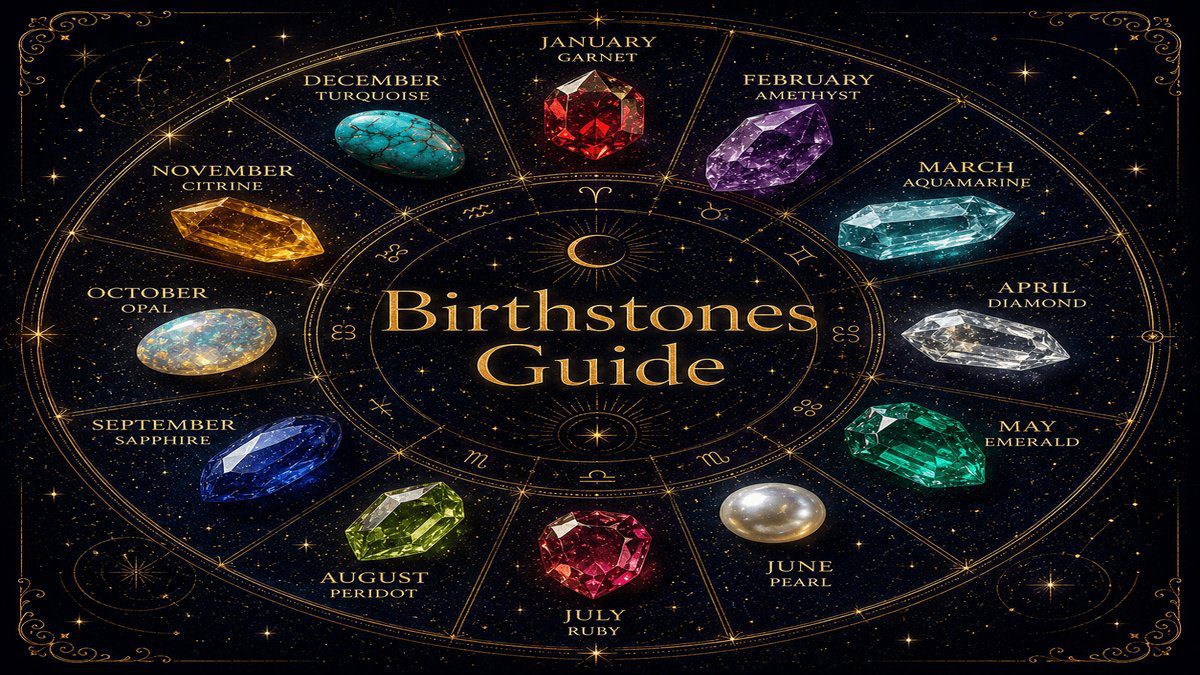
Find Your Birthstone by Birth Month
Each month has its own stone with unique meaning, history, and healing energy. Tap your birth month to discover yours in detail.
Famous Spinel Jewels in History
The most legendary Spinel specimens have shaped history through royal courts, museums, and cultural lore:
Black Prince Ruby (170 carats)
Actually a red spinel in British Imperial State Crown - misidentified as ruby for centuries.
Timur Ruby (361 carats)
Largest red spinel - inscribed with names of Mughal emperors, now in British royal collection.
Carew Spinel (133.5 carats)
Featured at Museum of Natural History in London.
Geological Properties of Spinel
- Magnesium aluminum oxide forming in metamorphic rocks
- Hardness 8 on Mohs scale - very durable
- Distinguished from ruby by cubic crystal system (ruby is trigonal)
- Colors range: red, pink, purple, blue, black, colorless
- Burma, Sri Lanka, Tajikistan, Vietnam are major sources