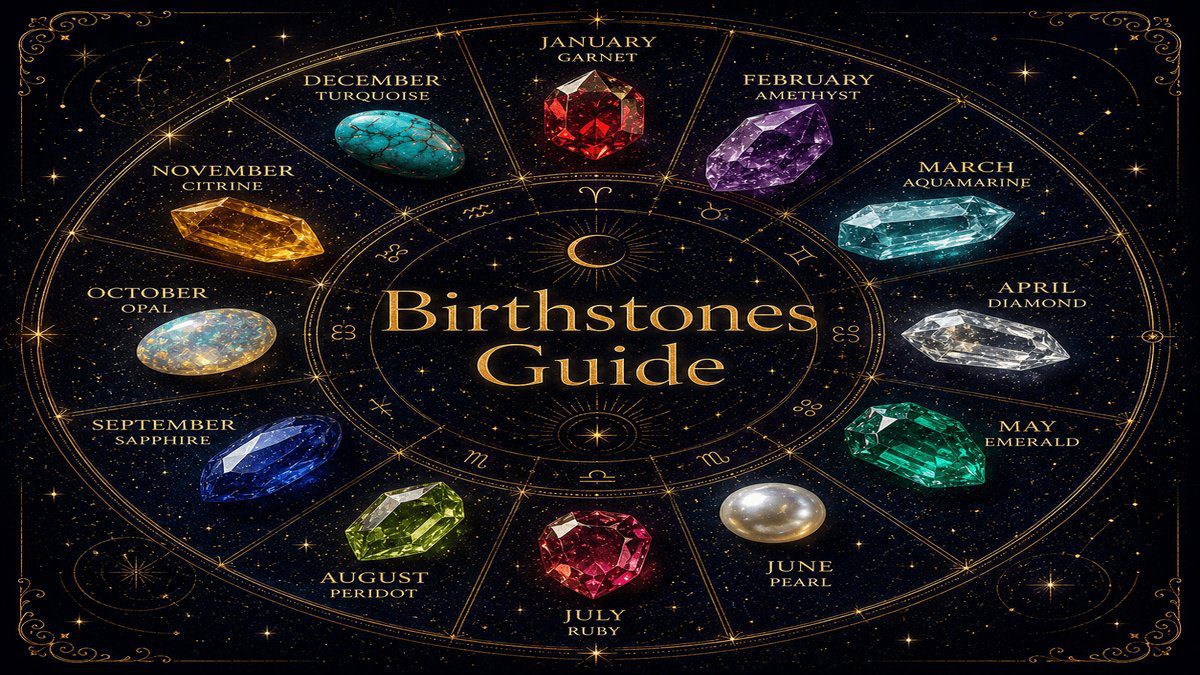
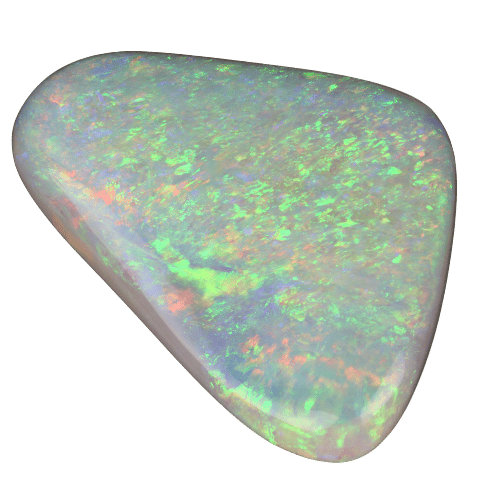
Opal
The fire-trapped-in-stone gem of imagination, magic, and inner light
Opal Quick Facts
The History of Opal
Opal is one of humanity's oldest known gemstones — opal artifacts from prehistoric Kenya date to 4000 BC. The Romans called opal the most precious of all gemstones, ranking it above ruby and emerald in their treatises. The Roman Senator Nonius reportedly chose exile rather than surrender his opal ring to Mark Antony. The medieval European belief that opal brought misfortune originated from Sir Walter Scott's novel Anne of Geierstein (1829), which featured a cursed opal — historians blame this single fictional reference for centuries of opal phobia. The 1850s discovery of Australian opal fields (now producing 95% of the world's opal) reshaped the global market. Black opal from Lightning Ridge, Australia (discovered 1903), is among the most valuable gemstones on Earth.
Opal Meaning & Symbolism
Opal contains every color flashing in its play-of-color — making it the gemstone of imagination, dreams, creativity, and inner vision. The Romans called it Cupid Paederos (loved by Cupid). In ancient Greek tradition opal granted the gift of prophecy. In Arabic legend, opal fell from the sky in flashes of lightning. In Aboriginal Australian Dreamtime, the Creator descended on a rainbow to deliver peace, leaving sparks of opal where his foot touched ground. Modern crystal healing associates opal with the crown chakra, with creative inspiration, and with the integration of multiple emotional states. October-born are said to share opal's quality of complexity — never one note, always shifting.
Famous Opals in History
The Roebling Opal, a 2,610-carat black opal from Lightning Ridge, sits at the Smithsonian. The Olympic Australis, a 17,250-carat uncut opal weighing 7.6 pounds, was discovered in 1956 and is valued at over $2.5 million. The Andamooka Opal, a 203-carat oval opal mounted in a brooch, was given to Queen Elizabeth II by South Australia in 1954. The Halley's Comet Opal is the world's largest uncut black opal at 1,982.5 grams (9,912 carats).
How to Care for Opal
Opal is delicate (Mohs 5.5-6.5) and contains 5-15% water — never expose to dehydrating conditions. Avoid extreme temperature changes (do not store in safe deposit boxes for years; the dryness can crack opal). Never use ultrasonic, steam, or chemical cleaners. Clean only with warm water, mild soap, and a soft brush. Store opal in a cotton-padded box at moderate humidity. If opal dries and cracks, the damage is permanent. Doublet and triplet opals (with backings) need extra care to keep moisture out.
Names That Connect to Opal
Opal's rainbow fire connects with names meaning rainbow goddess (Iris), dawn (Aurora), and creative magic.
Opal — Common Questions
What is opal's play-of-color?
Play-of-color is opal's defining property — the spectral fire that flashes in different colors as the stone is moved. It is caused by tiny silica spheres (typically 150-300 nanometers) arranged in regular grids that diffract light. Larger spheres produce red flashes; smaller spheres produce blue. Black opal shows the most dramatic play-of-color against its dark body.
Is it bad luck to wear an opal?
No — this superstition is based entirely on a single 1829 novel by Sir Walter Scott. Before that book, opal was considered the luckiest of all gemstones. Most cultures around the world (Roman, Arabic, Aboriginal Australian) view opal as a stone of luck, magic, and creativity.
What's the difference between black opal and white opal?
Black opal has a dark body (gray to black) which dramatically intensifies the play-of-color visible against it. White opal has a light body and shows softer flashes. Black opal from Lightning Ridge is the most valuable type, often selling for $5,000-50,000+ per carat for top quality. White opal is more affordable.
Why do opals crack?
Opal contains 5-15% water in its silica structure. When opal dries out (in arid climates, in heated air, in safety deposit boxes), the water evaporates and the structure can crack — called "crazing." This damage is permanent and irreversible. Keep opal in normal humidity; do not leave in cars on hot days.
Can I shower with my opal jewelry?
Brief water exposure is fine, but soap and shampoo can leave residues on opal that dim its play-of-color. Better to remove opal before showering. Definitely avoid hot tubs and pools — chlorinated and salt water are damaging over time.
Other Stones to Explore
More Cosmic Tools
Find Your Birthstone by Birth Month
Each month has its own stone with unique meaning, history, and healing energy. Tap your birth month to discover yours in detail.
💎 Bringing Opal Into Your Practice
Reading about Opal activates one part of you. Holding Opal activates an entirely different part. Ancient cultures across continents independently established the same truth: the stone in the hand does what the stone in the mind cannot.
Choose Your Format
- Tumbled Opal ( to 14) for pocket carry and meditation.
- Raw Opal ( to 32) most powerful energetically for altar or desk.
- Opal Bracelet ( to 35) daily-wear, energy active 24/7.
- Opal Pendant ( to 45) over heart chakra for emotional work.
Authenticity Quick Check
Verify: weight (denser than expected), temperature (cool in palm 30+ sec), color depth (natural variation, not uniform). Avoid mixed-category sellers and prices under .
Caring for Your Stone
Opal absorbs ambient energy continuously. Weekly cleansing required. The simplest tool: a Selenite charging plate ( to 22). Place crystals on it overnight. See our complete cleansing guide for 6 more methods.