Turquoise
The 6,000-year-old sacred sky-blue stone — Egyptian, Aztec, Native American
Turquoise Quick Facts
The History of Turquoise
Turquoise is one of the oldest gemstones in human use — Egyptian turquoise jewelry dates to 5000 BC, mined from the Sinai Peninsula and called mfkat ("joy"). The Egyptian goddess Hathor, called the Lady of Mfkat, was the patron of turquoise miners. Pharaonic burial pieces (King Tutankhamun's funeral mask is heavily turquoise-set) made the gem a symbol of immortality. Pre-Columbian peoples of Mesoamerica covered ceremonial masks in turquoise mosaics; the Aztecs treasured a particular type of green-blue turquoise from northern Mexico, which they called chalchihuitl. Persian (modern Iran) turquoise, called pirouzeh ("victorious"), was treasured for its sky-blue color and unmatched quality — Persian turquoise has been mined continuously for over 3,000 years from the Neyshabur deposits. Native American Southwestern tribes (Pueblo, Navajo, Apache) consider turquoise a sacred protective stone given by Father Sky; turquoise jewelry remains central to Navajo silverwork tradition.
Turquoise Meaning & Symbolism
Turquoise has been a sacred protective stone across nearly every culture that mined it. The Egyptians associated it with rebirth (placed in tombs); the Persians used it for victory (carried into battle); the Aztecs covered religious masks in it (uniting with the gods); Tibetan medicine considers turquoise a healer of pain and inflammation. In Native American Southwestern tradition, turquoise is the most sacred of all stones — a piece of the sky given to humanity. Modern crystal healing places turquoise at the throat chakra (truth, communication) and uses it for stability, calming, and grounding. Turquoise is the gem of long-distance travelers, healers, and those needing protection in challenging environments.
Famous Turquoises in History
The Tutankhamun Funeral Mask (1323 BC), the most famous turquoise object on Earth, sits in the Egyptian Museum in Cairo. The Aztec Mosaic Mask of Tezcatlipoca (mid-1500s), composed of 96 tiny turquoise plates set in gold over a human skull, is at the British Museum. The Hopi Pueblo turquoise jewelry tradition, dating to 1300s, continues today. Persian turquoise jewelry of the Safavid period (1500s-1700s) sells at auction for $50,000-500,000 per piece. The Navajo silver-and-turquoise tradition, codified in the 1880s by silversmith Atsidi Sani, has produced some of the most collectable Native American jewelry of the 20th century.
How to Care for Turquoise
Turquoise is soft (Mohs 5-6) and porous. It absorbs liquids, oils, and chemicals easily — staining and color changes are common with poor care. Never use ultrasonic, steam, or chemical cleaners. Avoid contact with perfumes, hairsprays, hand creams, and harsh soaps. Clean only with a soft dry cloth or barely damp soft cloth. Store turquoise separately from harder gems. Stabilization (impregnating turquoise with resin) is standard for commercial-grade material; high-end turquoise ("natural turquoise") commands premium prices. The famous "matrix" lines (dark veins in turquoise) are part of its character, not flaws.
Names That Connect to Turquoise
Turquoise's sky-blue Native American sacredness connects with names meaning sky, water, or freedom — Aria, Mei, Olivia (peace), Kai (ocean).
Turquoise — Common Questions
What is matrix in turquoise?
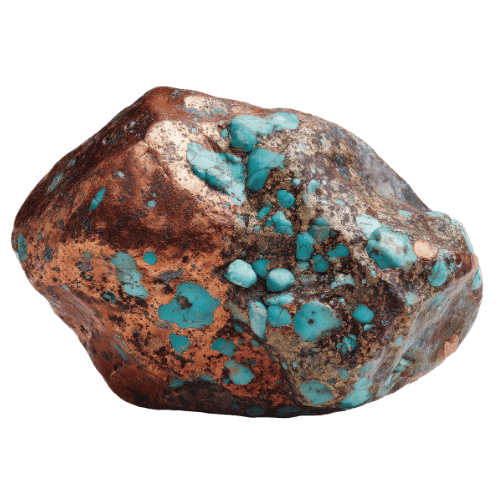
Matrix refers to the dark veins (often brown, black, or rust-colored) that crisscross many turquoise stones. Matrix is part of the host rock that grew alongside the turquoise — chert, quartz, or limonite. "Spiderweb" matrix is a fine network of veins, considered highly desirable in Native American jewelry. Pure clear-blue turquoise without matrix is called "clear stone" and is also valuable, just different in style.
What is stabilized turquoise?
Stabilized turquoise has been impregnated with resin (often epoxy) to enhance color and durability. The treatment is standard for commercial turquoise because raw turquoise is soft and porous. Stabilization makes turquoise wearable for jewelry and is universally accepted in the trade. Higher-grade "natural" or "untreated" turquoise is rarer and more expensive.
How do I tell real turquoise from fake?
Real turquoise has natural matrix (veins), variations in color, slight variations in surface. Fake turquoise (often howlite, magnesite, or plastic dyed blue) has too-uniform color, lacks natural matrix, and is often unnaturally cheap. Hardness test: real turquoise scratches glass; plastic does not. The most reliable test is gemological lab certification.
Why is turquoise sacred to Native Americans?
Indigenous Southwestern tribes (Navajo, Pueblo, Apache, Hopi) consider turquoise the most sacred of all stones — a piece of sky given by Father Sky to Mother Earth. Turquoise is used in healing ceremonies, jewelry passed through generations, and rituals connecting humans to the divine. The Navajo silver-and-turquoise jewelry tradition, dating to 1880, remains a central artistic expression.
Does turquoise really change color over time?
Yes. Turquoise is porous and absorbs body oils, perfumes, and chemicals over years of wear. The color can deepen, fade, or take on greenish hues depending on what is absorbed. Many traditions consider this color change a feature, not a flaw — a sign that the stone is bonding with its wearer. Stabilized turquoise resists color change better than untreated.
Other Stones to Explore
More Cosmic Tools
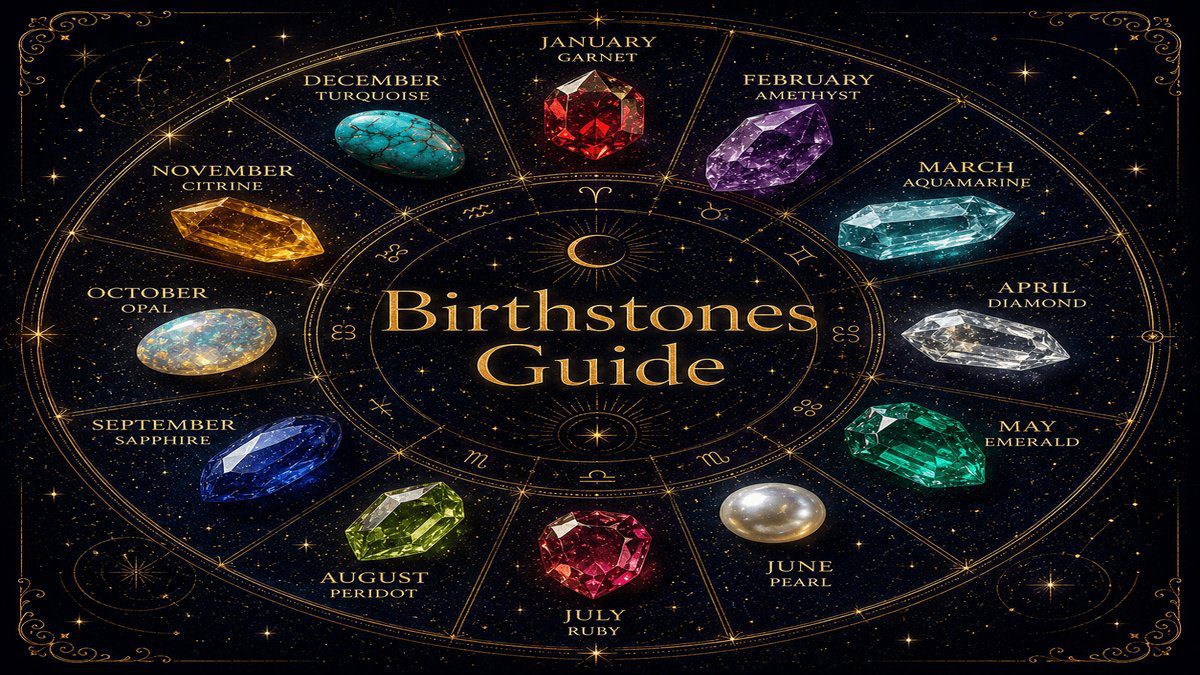
Find Your Birthstone by Birth Month
Each month has its own stone with unique meaning, history, and healing energy. Tap your birth month to discover yours in detail.
💎 Bringing Turquoise Into Your Practice
Reading about Turquoise activates one part of you. Holding Turquoise activates an entirely different part. Ancient cultures across continents independently established the same truth: the stone in the hand does what the stone in the mind cannot.
Choose Your Format
- Tumbled Turquoise ( to 14) for pocket carry and meditation.
- Raw Turquoise ( to 32) most powerful energetically for altar or desk.
- Turquoise Bracelet ( to 35) daily-wear, energy active 24/7.
- Turquoise Pendant ( to 45) over heart chakra for emotional work.
Authenticity Quick Check
Verify: weight (denser than expected), temperature (cool in palm 30+ sec), color depth (natural variation, not uniform). Avoid mixed-category sellers and prices under .
Caring for Your Stone
Turquoise absorbs ambient energy continuously. Weekly cleansing required. The simplest tool: a Selenite charging plate ( to 22). Place crystals on it overnight. See our complete cleansing guide for 6 more methods.