Tanzanite
The youngest gemstone — discovered in 1967, found only at one place on Earth
Tanzanite Quick Facts
The History of Tanzanite
Tanzanite is the most recently discovered birthstone — found in 1967 by a Maasai tribesman named Manuel d'Souza near the Mererani Hills of northern Tanzania, at the foot of Mount Kilimanjaro. The mineral itself (blue zoisite) had been known since 1805, but blue gem-quality crystals were unknown until d'Souza's discovery. Tiffany & Co. launched the gem internationally in 1968 — Tiffany's marketing director Henry Platt named it tanzanite, after its sole country of origin. The Mererani region remains the only place on Earth where tanzanite is mined. Geological estimates project that the deposits will run out within 30-40 years, making tanzanite both the youngest and rarest birthstone tradition. American Gem Trade Association added tanzanite to December's birthstone list in 2002, the first new birthstone added since 1912.
Tanzanite Meaning & Symbolism
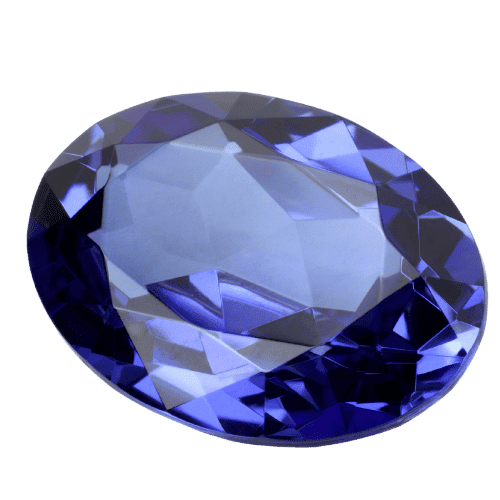
Tanzanite represents new beginnings, spiritual awakening, and the integration of mind, heart, and intuition. Its blue-violet color (often showing both colors depending on viewing angle, due to trichroism) symbolizes the meeting of celestial blue (consciousness) and royal purple (spirituality). The Maasai people who first found tanzanite associate the deep blue with new life — Maasai mothers often gift blue tanzanite to celebrate the birth of a child. In Vedic astrology, tanzanite is considered modern and powerful, recommended for those undergoing deep personal transformation. Modern crystal healing places tanzanite at the throat and third eye chakras, for clear truthful communication and intuitive insight. As a young birthstone, tanzanite is associated with newness, rebirth, and the courage to start over.
Famous Tanzanites in History
The Queen of Kilimanjaro, a 242-carat tanzanite, is the largest faceted tanzanite in the world. The Smithsonian's 122.7-carat tanzanite was donated by Tiffany & Co. founder Charles Lewis Tiffany's descendant. The Mawenzi Tanzanite, a 16.84-carat color-changing specimen, sold at Sotheby's in 2013. The Block C deposit (the major mining area) produced the famous L'Heure Bleue, a 60-carat cushion cut. Beyoncé's tanzanite engagement ring from Jay-Z (over 18 carats, surrounded by diamonds) helped revive global demand for the gem in the 2000s.
How to Care for Tanzanite
Tanzanite is moderately hard (Mohs 6.5-7) but has perfect cleavage in one direction — meaning a single sharp blow can split the stone. Avoid ultrasonic and steam cleaners (the sudden temperature change is risky). Clean only with warm water, mild dish soap, and a soft brush. Store tanzanite separately from harder gems. Heat treatment is universal (almost all commercial tanzanite is heat-treated to enhance the blue color); the treatment is stable and undetectable. Best worn in protective settings — earrings, pendants, and bezel-set rings — to minimize impact risk.
Names That Connect to Tanzanite
Tanzanite's blue-violet rarity resonates with names of royal heritage and celestial themes — Tatiana, Anastasia, Diana, Celeste.
Tanzanite — Common Questions
Where does tanzanite come from?
Tanzanite is mined exclusively from the Mererani Hills in northern Tanzania, at the foot of Mount Kilimanjaro. This is the only place on Earth where gem-quality tanzanite is found. Geological surveys estimate that the deposits will be exhausted within 30-40 years, making tanzanite a finite resource.
Will tanzanite really run out?
Yes. The Mererani deposits are limited, and current mining rates suggest exhaustion by 2040-2055. Tanzanite is officially classified as a finite gemstone. Some collectors and investors are buying tanzanite specifically because of this scarcity. Already, exceptional tanzanites can sell for $1,000-5,000 per carat.
Is tanzanite related to sapphire?
No — tanzanite is a different mineral entirely. Tanzanite is blue zoisite; sapphire is corundum. They look similar (both deep blue), but tanzanite is softer (Mohs 6.5-7 vs sapphire's 9), more delicate, and shows trichroism (different colors from different angles). Tanzanite is generally less expensive than fine sapphire but rarer.
Why is tanzanite the December birthstone?
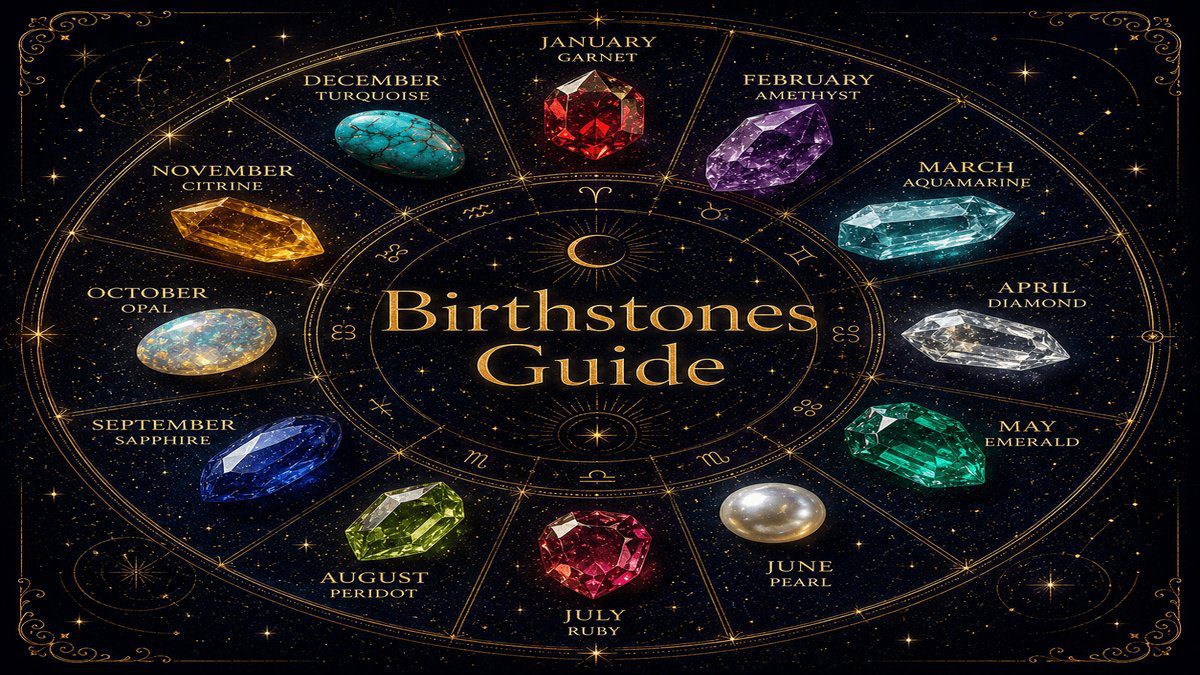
Tanzanite was added to December's birthstone list in 2002 by the American Gem Trade Association — the first new birthstone added since 1912. December previously had only turquoise and blue zircon. Tanzanite was added because it is uniquely tied to a specific place, time, and sense of newness.
Can I wear my tanzanite ring every day?
Tanzanite is more delicate than diamond, sapphire, or ruby. Daily wear in a protected setting (bezel rather than prong) is feasible, but avoid manual labor or activities involving impact. Earrings and pendants are safer for daily use. Have ring prongs and settings checked annually by a jeweler.
Other Stones to Explore
More Cosmic Tools
Find Your Birthstone by Birth Month
Each month has its own stone with unique meaning, history, and healing energy. Tap your birth month to discover yours in detail.
💎 Bringing Tanzanite Into Your Practice
Reading about Tanzanite activates one part of you. Holding Tanzanite activates an entirely different part. Ancient cultures across continents independently established the same truth: the stone in the hand does what the stone in the mind cannot.
Choose Your Format
- Tumbled Tanzanite ( to 14) for pocket carry and meditation.
- Raw Tanzanite ( to 32) most powerful energetically for altar or desk.
- Tanzanite Bracelet ( to 35) daily-wear, energy active 24/7.
- Tanzanite Pendant ( to 45) over heart chakra for emotional work.
Authenticity Quick Check
Verify: weight (denser than expected), temperature (cool in palm 30+ sec), color depth (natural variation, not uniform). Avoid mixed-category sellers and prices under .
Caring for Your Stone
Tanzanite absorbs ambient energy continuously. Weekly cleansing required. The simplest tool: a Selenite charging plate ( to 22). Place crystals on it overnight. See our complete cleansing guide for 6 more methods.