Bloodstone
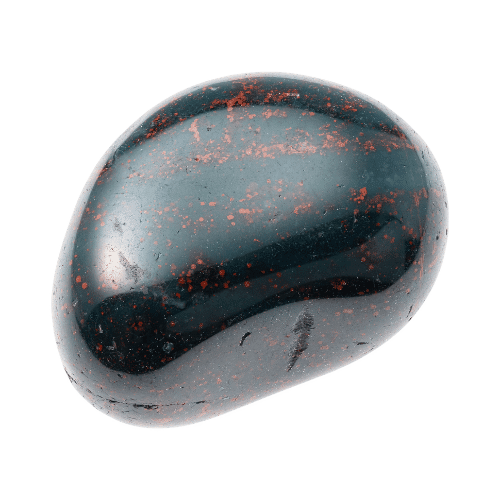
The Christian martyr stone — green chalcedony spotted with red iron drops
Bloodstone Quick Facts
The History of Bloodstone
Bloodstone — also called heliotrope — is dark green chalcedony spotted with red iron oxide inclusions that look like drops of blood. The Christian medieval legend of bloodstone holds that the stone formed when drops of Christ's blood fell on green jasper at the foot of the cross — making bloodstone a sacred relic associated with martyrdom and divine sacrifice. The Romans called it heliotrope ("sun-turner") because they believed the stone could change the sun's appearance when held in water; Pliny the Elder describes this property in his 1st-century Natural History. Roman soldiers carried bloodstone as a courage talisman and to staunch bleeding from wounds. In medieval Europe, bloodstone was carved into intaglio rings worn by warriors; the Crusaders wore bloodstone to invoke divine protection. Major bloodstone sources today include India (the largest deposits), Australia, Brazil, and the United States. Bloodstone remains the traditional and mystical March birthstone (paired with aquamarine in the modern list).
Bloodstone Meaning & Symbolism
Bloodstone is the warrior's stone — courage, vitality, and the power to heal physical wounds. The red flecks evoke blood; the green base evokes life-giving foliage and earth. Christian symbolism connects bloodstone to Christ's sacrifice and to martyrs' courage. In Vedic astrology, bloodstone is recommended for warriors, athletes, and those facing physical or emotional combat. Hindu tradition uses bloodstone for purification rituals. Modern crystal healing recommends bloodstone for boosting circulation, strengthening immune response, and facilitating spiritual courage during difficult life passages. The stone is associated with the root chakra and physical vitality.
Famous Bloodstones in History
The Smithsonian's bloodstone collection includes a remarkable 4.5-pound polished bloodstone slab from India, displaying classic green-with-red-spots pattern. The Vatican Museum holds bloodstone-carved religious objects from medieval Italy, including a 13th-century reliquary. The Hessian Mosaic, a Crusader-era jewelry piece set with bloodstone, is at the British Museum. Indian bloodstone carvings from the 16th-century Mughal era show intricate scenes from Hindu mythology rendered in the natural color contrast.
How to Care for Bloodstone
Bloodstone is hard (Mohs 6.5-7), suitable for daily wear. Treatments are uncommon — most bloodstone is sold natural. Clean with warm water, mild dish soap, and a soft brush. Ultrasonic cleaners are generally safe. Store separately from harder stones to prevent scratching. The polished surface holds well over time; bloodstone in cabochon or carved form is most durable.
Names That Connect to Bloodstone
Bloodstone's warrior heritage connects with names meaning lion, brave, courageous protector — Leo, Leon, Killian, Ronan.
Bloodstone — Common Questions
Why is it called bloodstone?
Bloodstone is named for the red iron-oxide inclusions that resemble drops of blood spattered across the green chalcedony base. The Christian medieval legend that the stone formed from Christ's blood at the foot of the cross gave it strong religious symbolism. The Greek name heliotrope ("sun-turner") reflects an earlier Greek belief that the stone could change the sun's reflection in water.
Is bloodstone the same as jasper?
Bloodstone is technically a green jasper (chalcedony) with red iron oxide spots. So yes — bloodstone is a specific variety of jasper. The pure green base distinguishes it from regular jasper. Some sources reserve the name bloodstone for green-with-red varieties only; others use it more loosely.
Can bloodstone really stop bleeding?
The folk medical claim is unsupported by science — bloodstone has no documented healing properties. However, the symbolic association with vitality and physical courage remains powerful. Roman soldiers carried bloodstone as a courage talisman, not because it actually stopped bleeding, but because the symbolism strengthened their resolve in battle.
Is bloodstone valuable?
Bloodstone is generally affordable — typically $5-50 per carat for jewelry-grade material. Top-quality bloodstones with distinct red spots and clean green base may reach $100-300 per carat. The stone is more valued for its symbolic and aesthetic appeal than its raw material value.
Why is bloodstone the March mystical birthstone?
Bloodstone has been a traditional March birthstone since Tibetan tradition codified the mystical birthstone list over 1,000 years ago. The March connection may reflect the spring renewal symbolism of the green-and-red color combination — death and rebirth, sacrifice and life.
Other Stones to Explore
More Cosmic Tools
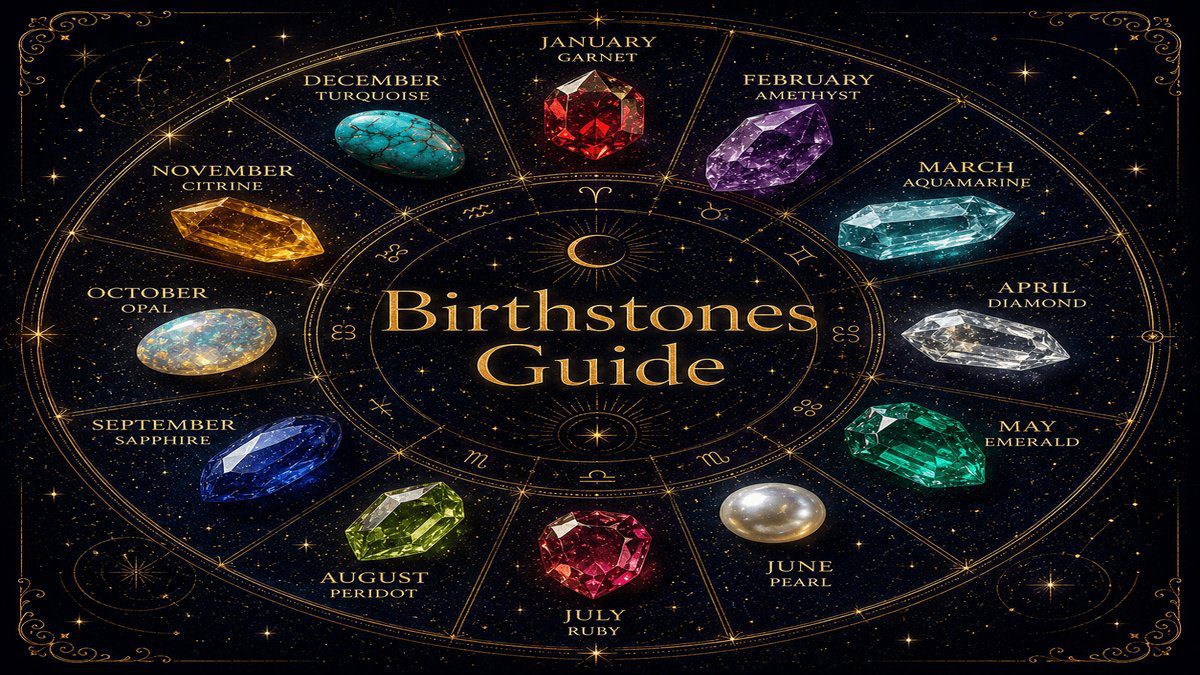
Find Your Birthstone by Birth Month
Each month has its own stone with unique meaning, history, and healing energy. Tap your birth month to discover yours in detail.