Onyx
The deep-black gem of strength, focus, and self-mastery
Onyx Quick Facts
The History of Onyx
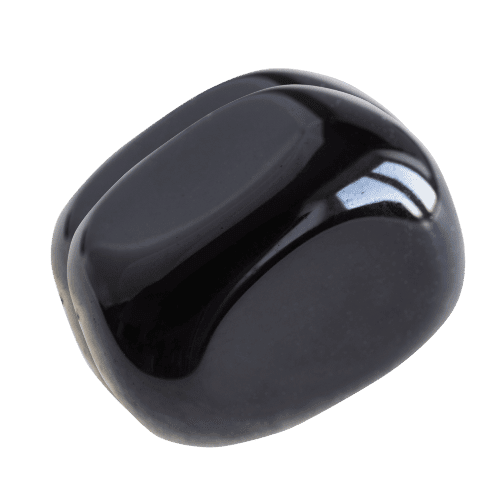
Onyx is black chalcedony — opaque deep solid black with characteristic mirror-finish polish. The name comes from the Greek onyx ("fingernail"), originally referring to a story where Cupid trimmed Venus's fingernails in her sleep; the trimmings fell to the ground and turned to stone. Roman signet rings used onyx because the polished surface would not stick to wax — perfect for sealing letters and contracts. The Roman Imperial collections (Augustus through Hadrian) contain numerous onyx intaglios. Renaissance Italy revived carved onyx cameos and intaglios as prestigious objects of jewelry. Queen Victoria of England wore extensive onyx mourning jewelry after Prince Albert's death in 1861, popularizing onyx as the gem of widowhood and remembrance. Modern onyx sources include Brazil (the largest), India, Madagascar, and Pakistan. Sometimes confused with banded marble (also called onyx in some commercial contexts), but true gemstone onyx is the chalcedony variety.
Onyx Meaning & Symbolism
Onyx is the gem of strength, self-mastery, and the absorption of negative energy. Roman warriors carried onyx into battle for unwavering focus. Hindu tradition uses onyx for resolving disputes — the deep black color is said to absorb conflict energy. In medieval Europe, onyx was set into priests' rings for spiritual discipline. Modern crystal healing places onyx at the root chakra (grounding) and recommends it for those needing willpower, focus during demanding periods, and protection from emotional drainage. The color black symbolizes the void from which all creativity emerges — the inner darkness that holds potential before it manifests. Black onyx is associated with mourning, transitions, and the integration of difficult life chapters.
Famous Onyxs in History
The Dévé Cup, a Roman onyx vessel from the 4th century AD carved from a single block, is at the Hermitage Museum. The Gemma Tiberiana, a Roman onyx cameo from the 1st century AD, is at the Bibliothèque Nationale de France. Queen Victoria's onyx mourning jewelry collection — including pieces commissioned in the years following Prince Albert's death — is at the Royal Collection Trust, London. The Vatican Museum's onyx-set medieval reliquaries are among the most ornate religious objects of the Middle Ages. Coco Chanel revived onyx in 1920s Modernist jewelry, making it a staple of Art Deco design.
How to Care for Onyx
Onyx is hard (Mohs 6.5-7), durable for daily wear. Most commercial black onyx is dyed (natural pure-black onyx is rare; commercial material is typically dyed grey chalcedony). The dyeing is permanent and accepted in the trade. Clean with warm water and mild dish soap. Ultrasonic cleaners are generally safe for solid onyx but should be avoided for treated or fracture-filled stones. Avoid harsh chemicals. Store separately from harder gems to prevent surface scratching. The polished mirror finish can dull over years of wear; light buffing restores shine.
Names That Connect to Onyx
Onyx's deep-black strength resonates with names of serious gravitas — Soren (Danish gravity), Knox (Scottish stone), Atticus (moral strength).
Onyx — Common Questions
Is most black onyx dyed?
Yes — most commercial black onyx is dyed gray or banded chalcedony. Natural pure-black onyx is rare. The dyeing process has been used for over 200 years and is universally accepted in the trade. The color is permanent under normal wear conditions. Reputable sellers should disclose dye treatment, though it is so standard that many do not.
What's the difference between onyx and sardonyx?
Onyx is solid black (or alternating black-and-white bands); sardonyx is red sard combined with white onyx layers. Both are chalcedony varieties, but the color combinations differ. Sardonyx is the prized cameo material because its color layers allow three-dimensional carving.
Is black onyx valuable?
Black onyx is one of the more affordable gemstones — typically $5-50 per carat for jewelry-grade material. Antique carved onyx pieces (Roman, Renaissance, Victorian) can be highly valuable due to artistic and historical merit. Modern designer onyx pieces from luxury houses (Chanel, Cartier) command premium prices.
Can I wear onyx every day?
Yes. Onyx's hardness (Mohs 6.5-7) makes it suitable for daily wear. The dyeing is stable. Avoid harsh chemicals and sudden temperature changes. The polished mirror finish may dull slightly over years of constant wear; periodic light polishing maintains the look.
Why is onyx the December mystical birthstone?
Onyx is December's mystical birthstone in the Tibetan Buddhist tradition, representing the depth and quietude of the year's longest nights. The deep black color matches winter's darkness. The modern American December list assigns turquoise, tanzanite, and zircon — onyx remains the older mystical choice.
Other Stones to Explore
More Cosmic Tools
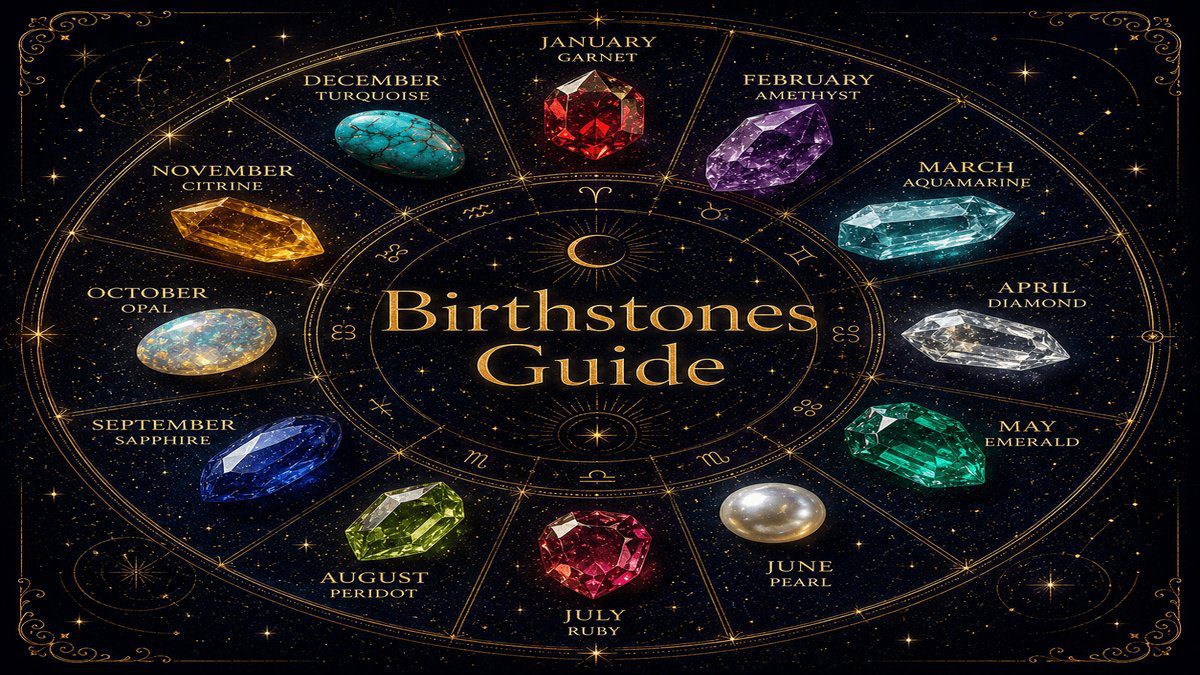
Find Your Birthstone by Birth Month
Each month has its own stone with unique meaning, history, and healing energy. Tap your birth month to discover yours in detail.