Ruby
The king of gems — passion, vitality, and unstoppable life force
Ruby Quick Facts
The History of Ruby
Ruby has been treasured longer than nearly any other gem. The Sanskrit word for ruby — ratnaraj — translates literally to king of gems, and ancient Hindu texts ranked it above diamond. Burmese (Myanmar) ruby mines have produced the world's finest stones for over 800 years; Burmese soldiers reportedly inserted small rubies into their flesh before battle, believing they granted invulnerability. The most prized rubies, called "pigeon-blood red," come from the Mogok Valley of Myanmar — the term refers to the deep red of fresh blood from a pigeon, a comparison ancient Burmese gem dealers used to grade quality. In the 17th century, ruby was thought to glow with an inner fire that made it unable to be hidden in cloth or wax. Ancient Hindus believed worshippers who offered fine rubies to Krishna would be reborn as emperors.
Ruby Meaning & Symbolism
Ruby is associated with the root chakra and the heart's vital energy — its red color directly evokes blood and life force. In medieval Europe ruby was the gem of clergy, royalty, and warriors: it was believed to warn its wearer of approaching danger by darkening, to ward off plague, and to ensure success in love. Cleopatra reportedly preferred rubies to all other stones for jewelry. In Vedic astrology, ruby is the gem of the Sun and is recommended for those needing more confidence, charisma, and personal power. Modern crystal healing associates ruby with passion, courage, leadership, and reigniting joy when life feels dim.
Famous Rubys in History
The Black Prince's Ruby — a 170-carat polished red gem set into the British Imperial State Crown — is actually a spinel (gemological identification only became precise in the 18th century). The Sunrise Ruby, a 25.59-carat Burmese pigeon-blood ruby, sold at Sotheby's in 2015 for $30.42 million, the highest price ever paid for a ruby at auction. Elizabeth Taylor's Cartier ruby brooch, given to her by Mike Todd, sold for $4.2 million after her death. The Liberty Bell Ruby, an 8,500-carat ruby carved into a replica of the Liberty Bell, was stolen from a Delaware jewelry exhibit in 2011 and never recovered.
How to Care for Ruby
Ruby is the second-hardest gemstone (Mohs 9) — durable enough for daily wear and rings. Most natural rubies are heat-treated to enhance color; this is universally accepted in the trade. Ultrasonic cleaning is generally safe except for fracture-filled rubies. Avoid sudden temperature changes and harsh chemicals. Store separately from softer gems to prevent scratching them. Synthetic ruby (created by Auguste Verneuil in 1902) is identical molecularly but very inexpensive; ask your jeweler for a certificate when buying.
Names That Connect to Ruby
Ruby's fiery passion connects with names meaning fire, victory, lion, and bold love — including the name Ruby itself.
Ruby — Common Questions
What makes a ruby pigeon-blood red?
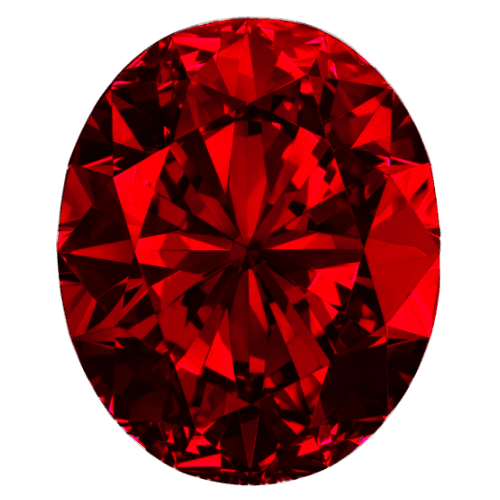
Pigeon-blood red is the trade term for the most prized ruby color: a deep, slightly purplish red with strong saturation and no brown undertones. The term originated with Burmese gem dealers and refers to the color of blood from a freshly killed pigeon. Top pigeon-blood rubies from Myanmar's Mogok Valley command higher per-carat prices than diamond.
Are all rubies treated?
Approximately 95% of commercial rubies are heat-treated to enhance color and clarity. Heat treatment is a permanent, accepted enhancement in the trade. Untreated natural rubies of fine quality are extremely rare and can sell for 5-10x the price of treated equivalents. Always ask for a treatment disclosure before purchasing high-end ruby.
Is ruby better than diamond?
It depends on what you mean by better. Ruby is rarer than diamond, deeper colored, and has 1,000+ years of cultural prestige. Diamond is harder (Mohs 10 vs 9), more durable to chipping, and more universally recognized. For engagement rings, ruby is a bold alternative; for everyday wear, both work well.
What does ruby symbolize?
Across cultures, ruby symbolizes vitality, passion, courage, royalty, protection in war, and the life force of the heart. In Hindu tradition it is the gem of the Sun. In Vedic astrology it boosts confidence and personal power. In Western tradition it is associated with deep romantic love and matrimonial fidelity.
Why is July the ruby birth month?
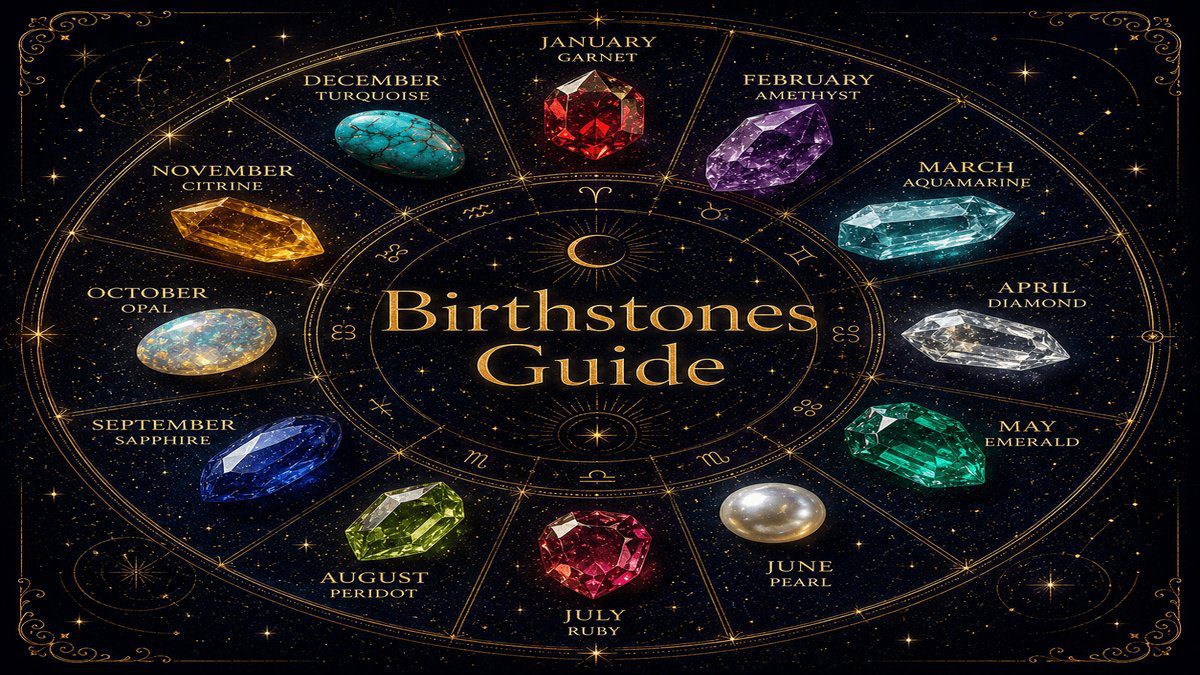
Ruby has been associated with July since the medieval European birthstone tradition. The connection probably reflects the warmth and intensity of July (in the Northern Hemisphere) and ruby's associations with the Sun, which dominates summer. Both modern and traditional birthstone lists agree: July belongs to ruby.
Other Stones to Explore
More Cosmic Tools
Find Your Birthstone by Birth Month
Each month has its own stone with unique meaning, history, and healing energy. Tap your birth month to discover yours in detail.
💎 Bringing Ruby Into Your Practice
Reading about Ruby activates one part of you. Holding Ruby activates an entirely different part. Ancient cultures across continents independently established the same truth: the stone in the hand does what the stone in the mind cannot.
Choose Your Format
- Tumbled Ruby ( to 14) for pocket carry and meditation.
- Raw Ruby ( to 32) most powerful energetically for altar or desk.
- Ruby Bracelet ( to 35) daily-wear, energy active 24/7.
- Ruby Pendant ( to 45) over heart chakra for emotional work.
Authenticity Quick Check
Verify: weight (denser than expected), temperature (cool in palm 30+ sec), color depth (natural variation, not uniform). Avoid mixed-category sellers and prices under .
Caring for Your Stone
Ruby absorbs ambient energy continuously. Weekly cleansing required. The simplest tool: a Selenite charging plate ( to 22). Place crystals on it overnight. See our complete cleansing guide for 6 more methods.