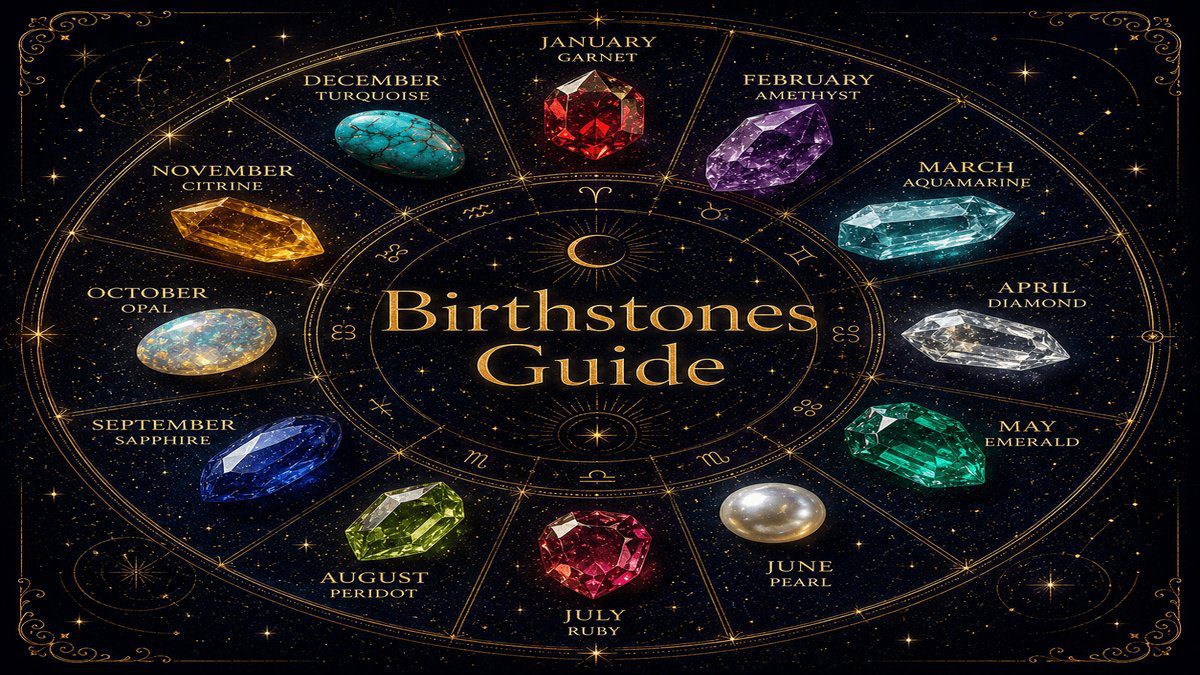
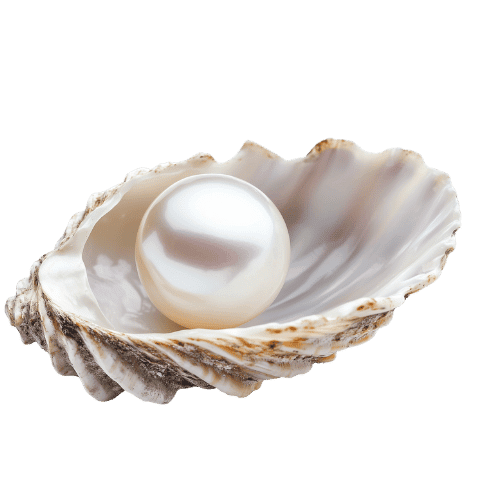
Pearl
The only gem made by a living animal — purity, wisdom, and patient transformation
Pearl Quick Facts
The History of Pearl
Pearl is the oldest gem in continuous human use — pearl jewelry from Mesopotamia dates to 4000 BC. The ancient Romans valued pearls so highly that the matron Lollia Paulina, wife of Emperor Caligula, attended a routine dinner wearing 40 million sesterces worth of pearls (Pliny the Elder, Natural History). Pearls have been Persian Gulf treasures for thousands of years; the ancient diver-economy of Bahrain was built entirely on natural pearl harvesting. Cleopatra reportedly dissolved one of the world's largest pearls in vinegar and drank it to win a bet with Mark Antony that she could host the most expensive dinner in history. The 1893 Japanese cultured-pearl invention by Kokichi Mikimoto democratized pearls — making them available to ordinary buyers for the first time. Coco Chanel made pearls the icon of modern feminine elegance in the 1920s.
Pearl Meaning & Symbolism
Pearl symbolizes purity, hidden wisdom, and the value of patience — the long process by which an oyster transforms an irritant into a thing of beauty. In Christian iconography pearls represent the soul of the faithful and the heavenly kingdom (Matthew 13:46, the parable of the pearl of great price). In Hindu mythology, the pearl was associated with the moon and given to brides for auspicious marriage. Vedic astrology assigns pearl to the Moon, making it ideal for those needing emotional balance and intuition. Persian legend says pearls form when a drop of dew falls into an oyster on a moonlit night.
Famous Pearls in History
La Peregrina, a 50.56-carat pear-shaped pearl found in Panama in the 16th century, was owned by King Philip II of Spain, then Bonaparte, then Elizabeth Taylor (gift from Richard Burton, 1969). It sold for $11.8 million after Taylor's death. The Hope Pearl is a 1,800-grain (450-carat) baroque pearl in the British Museum. The Pearl of Lao Tzu (also called Pearl of Allah) is the largest pearl ever found at 14 pounds — though debate exists over whether it is a true pearl or a calcium concretion. Mikimoto pearls became the gold standard for cultured pearls, sold at his Tokyo and New York stores.
How to Care for Pearl
Pearl is the softest birthstone (Mohs 2.5-4.5), made of layered nacre rather than crystalline mineral. Pearls require gentle care: never use ultrasonic, steam, or chemical cleaners. Pearls dissolve in acid (which is why Cleopatra could drink them in vinegar) and are damaged by perfume, hairspray, and even sweat. Apply makeup and perfume BEFORE putting on pearl jewelry. Wipe pearls with a soft cloth after each wearing. Restring pearl necklaces every 1-3 years if worn often. Store in a soft pouch separately from harder gems.
Names That Connect to Pearl
Pearl's lunar purity directly matches the name Pearl, plus Margaret (which literally means pearl in Greek), and moon-themed names.
Pearl — Common Questions
What's the difference between cultured and natural pearls?
Natural pearls form by chance when a foreign object enters an oyster naturally — extremely rare. Cultured pearls are produced by humans implanting a small bead into the oyster, which then coats it in nacre over 1-3 years (Mikimoto invention, 1893). Both are real pearls; cultured pearls are 95%+ of pearls in the modern market.
Are freshwater pearls less valuable than saltwater pearls?
Generally yes. Saltwater pearls (Akoya, Tahitian, South Sea) are produced by single oysters, are more uniformly round, and have higher luster. Freshwater pearls (mostly from Chinese mussels) produce many pearls per shell and are more affordable, though the highest-quality freshwater pearls now rival mid-range saltwater stones.
Why do pearls turn yellow?
Pearls absorb skin oils, perfume, hairspray, and acidic foods over years. Without proper cleaning, the nacre can yellow or develop a dull surface. Always apply makeup and perfume before wearing pearl jewelry; wipe pearls with a soft cloth after wearing; store separately.
Can you wear pearls every day?
Pearls are softer than other gems (Mohs 2.5-4.5) and benefit from rest. If you wear pearls daily, treat them gently — avoid contact with chemicals, perfumes, and hard surfaces. Pearl earrings and necklaces survive daily wear best; pearl rings are at higher risk because the hand contacts surfaces constantly.
What is a baroque pearl?
A baroque pearl is a non-spherical pearl with an irregular shape — sometimes oval, sometimes asymmetrical, sometimes resembling drops or animals. They were highly prized during the European Baroque era for jewelry. Each baroque pearl is unique. Modern designers have revived interest in baroque shapes for their natural artistry.
Other Stones to Explore
More Cosmic Tools
Find Your Birthstone by Birth Month
Each month has its own stone with unique meaning, history, and healing energy. Tap your birth month to discover yours in detail.
💎 Bringing Pearl Into Your Practice
Reading about Pearl activates one part of you. Holding Pearl activates an entirely different part. Ancient cultures across continents independently established the same truth: the stone in the hand does what the stone in the mind cannot.
Choose Your Format
- Tumbled Pearl ( to 14) for pocket carry and meditation.
- Raw Pearl ( to 32) most powerful energetically for altar or desk.
- Pearl Bracelet ( to 35) daily-wear, energy active 24/7.
- Pearl Pendant ( to 45) over heart chakra for emotional work.
Authenticity Quick Check
Verify: weight (denser than expected), temperature (cool in palm 30+ sec), color depth (natural variation, not uniform). Avoid mixed-category sellers and prices under .
Caring for Your Stone
Pearl absorbs ambient energy continuously. Weekly cleansing required. The simplest tool: a Selenite charging plate ( to 22). Place crystals on it overnight. See our complete cleansing guide for 6 more methods.